
by Ian Scoones
This is the third in a series of blog posts that bring together PASTRES work from 2018-2023 around a number of themes. In this post, we show the importance of mobility for pastoralists.
To read through our archive on this theme, click on the link at the end of this post.
The ability to move to respond to variable conditions is central to pastoral strategies. This takes many forms, ranging from daily to seasonal to inter-annual movements.
So what makes movement possible? As described in the research with the Rabari in Gujarat in India by Natasha Maru, movements are facilitated by social relations – amongst pastoralists themselves and with others, such as farmers – as well as technologies, including mobile phones, trucks, tractors and so on.
PASTRES research has highlighted many different types of mobility – from vertical migration from the summer to winter pastures in Amdo Tibet in China, to seasonal movement across the savannas of Kenya and Ethiopia, to the complex, changing transhumance patterns across Europe (in Sardinia, Spain or the Italian Alps), or Latin America (including Chile, Peru and Mexico).


Increasingly, mobility is being constrained by the expansion of infrastructure, the encroachment of farms, urban areas and so on. As we found in Kutch in western India and northeastern Turkey, pastoralists must navigate their way through such complexity, negotiating with farmers, state officials and others along the way. Discriminatory legal restrictions may in turn act to undermine mobile lifestyles, as has been happening in the UK.
Even though classic transhumance and migration patterns may change, social and political skills can allow for the negotiation of access to grazing, even if in an increasingly crowded environment. Institutional flexibility is essential. For example, the ‘re-socialising’ of water resources is critical for pastoralists who are responding to uncertainties in Somali region in Ethiopia.
Adaptable livelihoods
Processes of investment have accelerated in all pastoral areas, even those once regarded as remote, frontier lands. For example, in eastern Africa, pastoral lands have been encroached upon by wildlife parks, tourist facilities, commercial agriculture, energy investment and growing towns, as Ryan Unks shows in Amboseli National Park and Laikipia County of Kenya.
And, as the PASTRES team found out when we visited Afar and Karrayu areas of Ethiopia, the squeeze on pastoral livelihoods from state projects (and neglect) is highly visible. Some pastoralists choose to settle, perhaps because of the allure of markets or because the rest of the family have other jobs, go to school or need to attend clinics. Sometimes, settlement is forced on pastoralists due to conflict in their home territories, as was the case in Mali, or when governments encourage settlement through the provisioning of housing, schools and so on, as has been happening in Amdo Tibet in China.
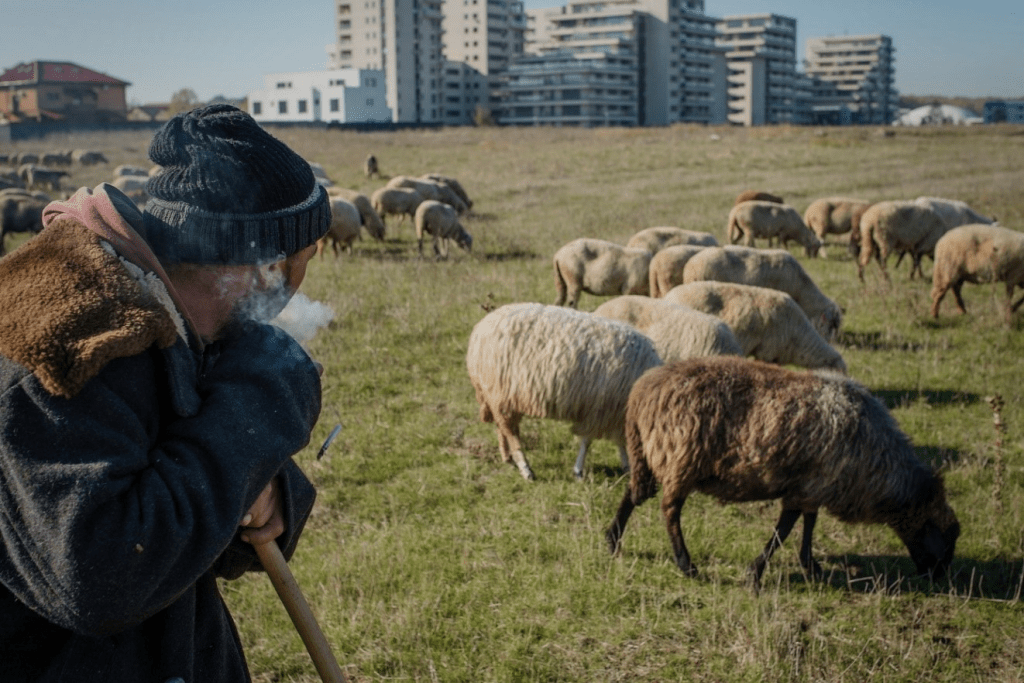
In other settings, urban pastoralism is growing rapidly, complementing other sources of income and utilising spare urban land, for example, in Romania. But making a living in new urban settings creates many new uncertainties and challenges, particularly for young people, as shown in northern Kenya.
Changes in mobility patterns result in shifts in livelihoods and social relations, as well as patterns of production. Sometimes herds and flocks are separated, with different people looking after different animals. The growth of camel milk marketing in northern Kenya, for example, has resulted in new herding arrangements. Sometimes herders are hired to maintain a mobile herd in the extensive rangelands. However, this may result in conflicts, as they may not have the skills and authority to negotiate with other land users. The acute shortage of skilled herding labour in many pastoral areas including Europe and South Asia, in turn affects the ability of pastoralists to be mobile.
Heightened concern with farmer-herder conflicts, for example in the Sahel, has often pointed the blame at mobile pastoralists, with policies encouraging settlement on large ranches. But a deeper look at such conflicts highlights how good relations existed in the past, but these have sometimes broken down as pastoralists become disenfranchised and disillusioned by the state and co-opted by others, with ethnic tensions exacerbated.
Facilitating mobility
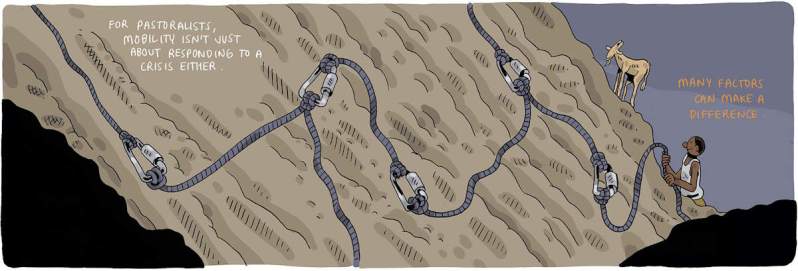
Facilitating mobility must be a central feature of pastoral policies globally. This may take different forms, but ensuring the capacity to move is vital for sustaining livelihoods, whether of animals or humans. This is why learning lessons from pastoralists is important for wider migration policy involving people who must move to seek safety and make a living.
Explore our work on mobility
Click on the button to explore the archive of posts on this theme.
 Pastoralism, Uncertainty and Resilience - PASTRES