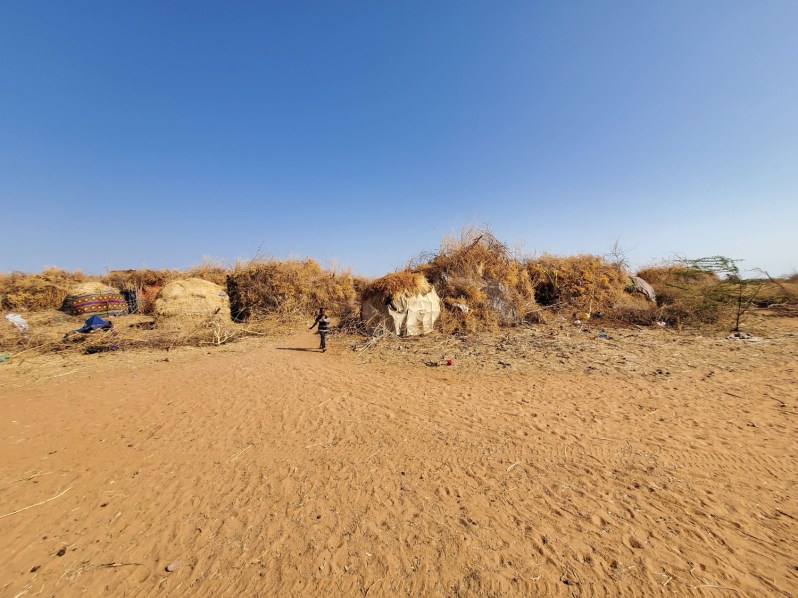
Desertification narratives often frame interventions in pastoral areas. Building on much past research, the PASTRES programme extended the critique of ‘desertification narratives’ in pastoral areas. This blog recaps on these contributions as part of our monthly thematic posts for the International Year for Rangelands and Pastoralists (IYRP), which this month is focused on ‘Soils, Water Resources and Sustainable Land Use’.
Insights from non-equilibrium ecology
As argued in a PASTRES blog review of the edited book, The End of Desertification? Disputing Environmental Change in the Drylands, tales of desertification across the world’s drylands are a recurrent theme in policy.
Yet challenges to desertification myths, and simplistic equilibrium approaches to rangeland dynamics based on Clementsian succession ecology, have long been made as discussed in last month’s thematic blog. For example, Jeremy Swift and Andrew Warren wrote classic papers as far back as 1977 for the UN Conference on Desertification, but both were ignored. Stephen Sandford’s important 1983 book on pastoralism made many similar points, based on a mountain of evidence.
Building on the insights of Jim Ellis and the research team working in Turkana, Kenya, the Woburn conferences in the early 1990s resulted in two books that made the case for a new paradigm for African rangeland management (Range Ecology at Disequilibrium in 1993 and Living with Uncertainty in 1994). The science of remote sensing and the application of geographical information systems, supported by long-term ecological monitoring, have equally enhanced spatial understandings of environmental change massively, reinforcing the argument against a linear view of desertification and a more dynamic perspective.
All this work provided the background for the PASTRES programme and our focus on ‘uncertain worlds’.
Ecological dynamics and rangeland governance in Kenyan and Tibet rangelands
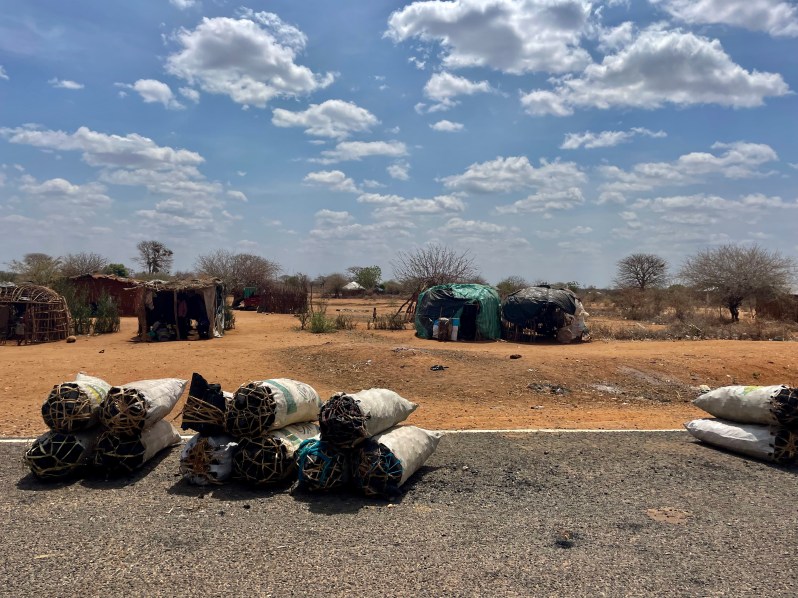
In a series of blogs, Ryan Unks, then PASTRES postdoc affiliate, explored how changes in pastoral mobility relate to spatial patterns in rainfall and vegetation productivity. Using GIS and remote sensing, he analysed changes in patterns of pastoral mobility in relation to the variability of rainfall and vegetation at broad scales, and asked how changes in access have restructured processes like herbivory and fire at finer scales.
It is these types of analyses that connect complex ecological dynamics with social and political processes, especially in ‘shared lands’ where both pastoralists’ livestock and wildlife make use of the same resources. These offer a much more nuanced perspective than the simplistic discussions of ‘desertification’ and ‘range degradation’.
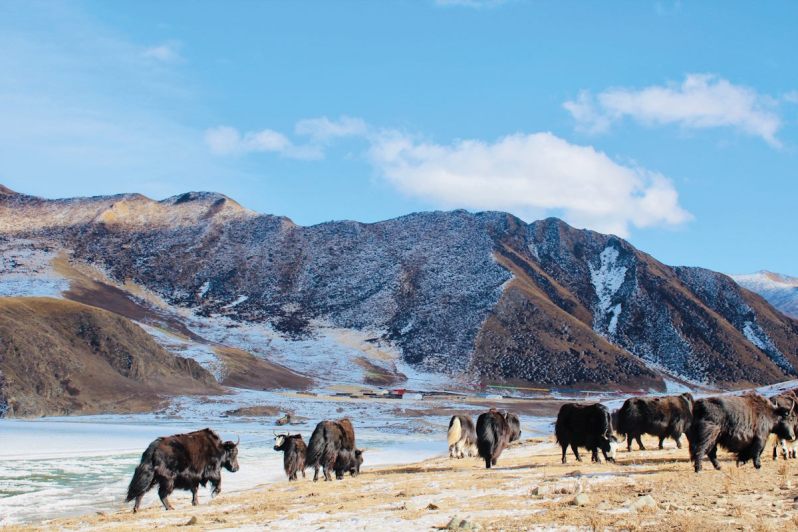
In Amdo Tibet in China, Palden Tsering as part of his PASTRES PhD research explored ‘hybrid governance’ arrangements that allow livestock to negotiate variable resources, reduce environmental impacts and sustain livelihoods. Rather than approaches focused on ‘protection’ or simple ‘restoration’, joint management of complex rangelands offers a route to a more effective form of rangeland governance.
Science and the politics of policy
Unfortunately, much of this accumulated evidence has been ignored, and the narratives of desertification persist. Why is this? The relationship between science and policy is not linear: new data leading to a transformation of scientific paradigms does not necessarily result in a change in policy and practice. Evidence and policy, despite the rhetoric around evidence-based policymaking, are not neatly linked.
And there are deep colonial histories to desertification myths, as Diana Davis explores in another PASTRES blog.
“Indeed, before the word “desertification” was coined in the 1920s by a French colonial forester, western imperial powers had executed many different programs to try to curtail the perceived spread of deserts and also to try to “restore” the drylands to productivity. Underlying these attempts was a complex, long-standing, and primarily Anglo-European understanding of deserts which equated them with ruined forests much of the time. The assumption that the world’s drylands are worthless, deforested, and overgrazed landscapes has led, since the colonial period, to programs and policies that have often systematically damaged dryland environments and marginalized large numbers of indigenous peoples, many of whom had been using the land sustainably.”
Why is it that, even when scientific evidence is seemingly incontrovertible, shifts in policy discourse and practice do not happen? Other forces are at play, beyond the slow, patient and rigorous accumulation of knowledge, making it important to understand the wider politics of policy processes. One reason is that new ways of thinking only permeate through slowly via training, curriculum revisions and generational change in professions. Incumbent power also resists change. This reflects the conservative nature of institutions and professions. While the science of rangelands has shifted, old ideas stick among field-level departments, aid agencies and their officials. It is perhaps not surprising when there is fast turnover of staff, poor resourcing, and institutional inertia and limited learning.
But it is not only inertia. There is also a more active politics of resistance. ‘Seeing like a state’, rather than a pastoralist or dryland farmer, has many consequences, as states attempt to control, manage and discipline such marginal areas. Programmes of sedentarisation, fixed water points and often draconian environmental measures to combat desertification are regularly promoted, supported by international aid agencies.
Great green walls
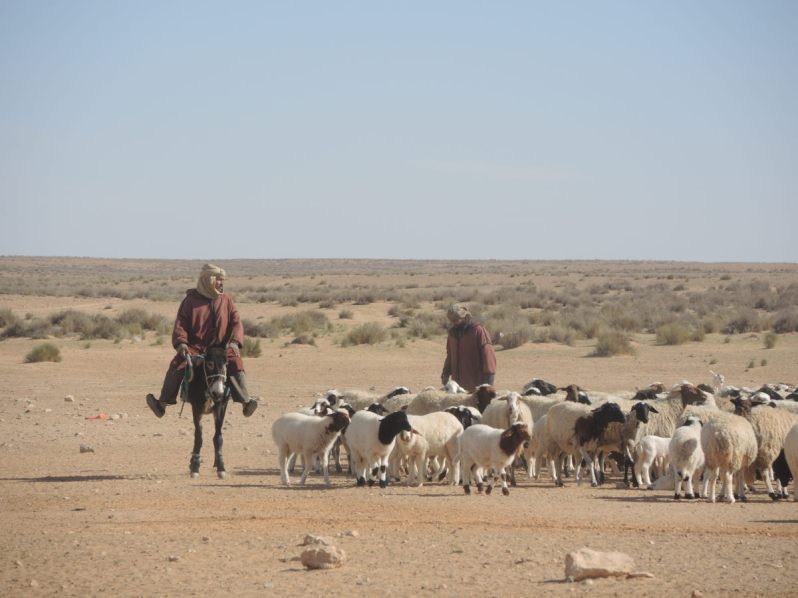
Attempts at ‘combatting desertification’ frequently resort to technical measures, rather than understanding socio-ecological dynamics and supporting livelihoods. This has been the lesson from the experience of the Africa’s ‘great green wall’, discussed in another PASTRES blog by Ian Scoones and Camilla Toulmin. On 11 January 2021 at the One Planet Summit, President Macron of France announced $14 billion dollars of funding for the Sahelian “Great Green Wall”. Stretching across 8000 kms and 100 million hectares, from Senegal in the west to Djibouti in the east, the ‘advancing deserts’ of the Sahara are to be rolled back through the planting of trees and greening of landscapes across the Sahelian region. The blog concludes:
“A focus on regenerating landscapes and promoting livelihoods through a sensitive, locally-based approach to sustainable development is the way forward, and likely will cost less than $14 billion. Most important is the recognition that there are numerous existing practices – of soil conservation, water control and tree management – that already constitute ‘nature-based solutions’ generated from local initiatives. Yes, these need support, but giving agency to local voices, strengthening rights over land and water, emphasising grounded practices and ensuring accountability will be more likely to create the sustainable mosaic of green patches across the Sahel that one day may be seen from space.”
A focus on non-equilibrium, dynamic systems points to a different response – one centred on flexibility, adaptive management, responsive care and resilience, not control and technocratic intervention. The desertification narrative promotes a control-oriented response – with destocking, ‘green belts’, forest planting and engineering solutions dominating – rather than one that embraces uncertainty, and makes productive use of variability, as in the non-equilibrium paradigm. But of course, realising the alternative paradigm is difficult. Institutional biases, procedures and routines reinforce control, especially when funding agencies and governments have fewer and fewer people in the field, connecting with the real world of the drylands.
Let’s hope that the International Year of Rangelands and Pastoralists and the conversations at the 17th UN Conference on Drylands and Desertification in August this year in Mongolia can challenge the standard desertification narrative and make a difference to the way interventions in pastoral area are conceived and implemented.
__________
Explore PASTRES work on desertification:
Blogs: https://pastres.org/?s=desertification
Short course: https://pastres.org/online-course/5-non-equilibrium-environments/
Seeing Pastoralism; https://seeingpastoralism.org/an-uncertain-world This is the seventh PASTRES blog in the series celebrating the 2026 UN International Year of Rangelands and Pastoralists


“Stephen Sandford’s important 1983 book on pastoralism made many similar points, based on a mountain of evidence.”
Thank you for noting this. was a career-changing book for me. He would, I think, be among the first to point out it was criticized then (e.g., https://www.jstor.org/stable/i40121749.along) lines that persist into the present.
LikeLike