The April theme for the 2026 UN International Year for Rangelands and Pastoralists is ‘climate and resilience’. Two big topics rolled into one. For this month, this will be a bumper blog, covering work around these themes as part of the PASTRES programme.
Are livestock always bad for the planet?
Livestock are an important contributor to greenhouse gases and therefore climate change. But PASTRES research asked, which livestock and where are to blame? Too often all livestock are lumped together, with industrial livestock systems being talked about in the same breath as extensive, mobile systems such as pastoralism.
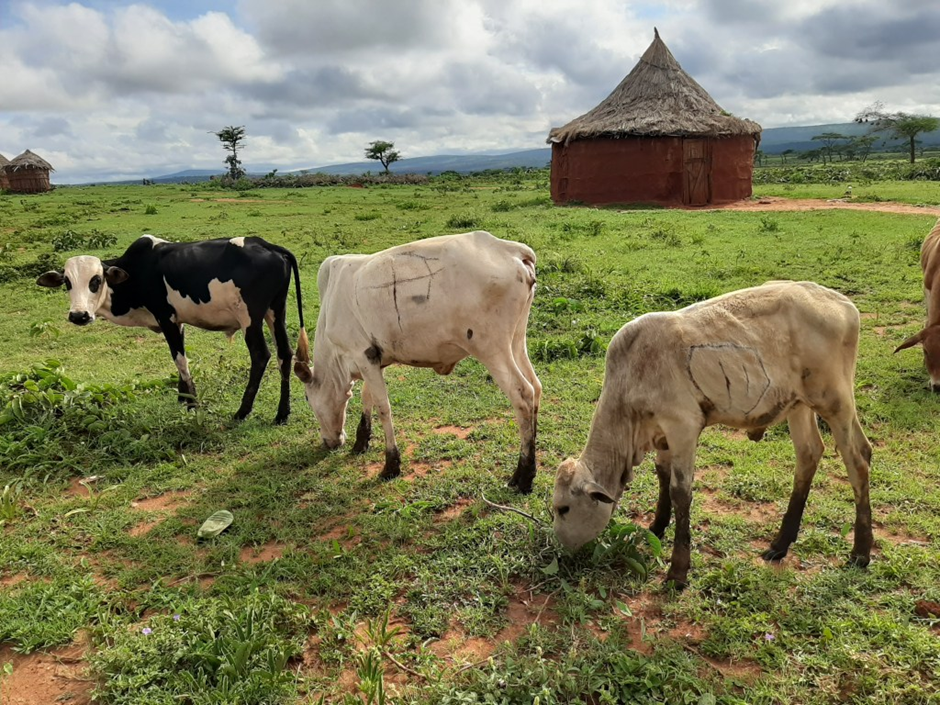
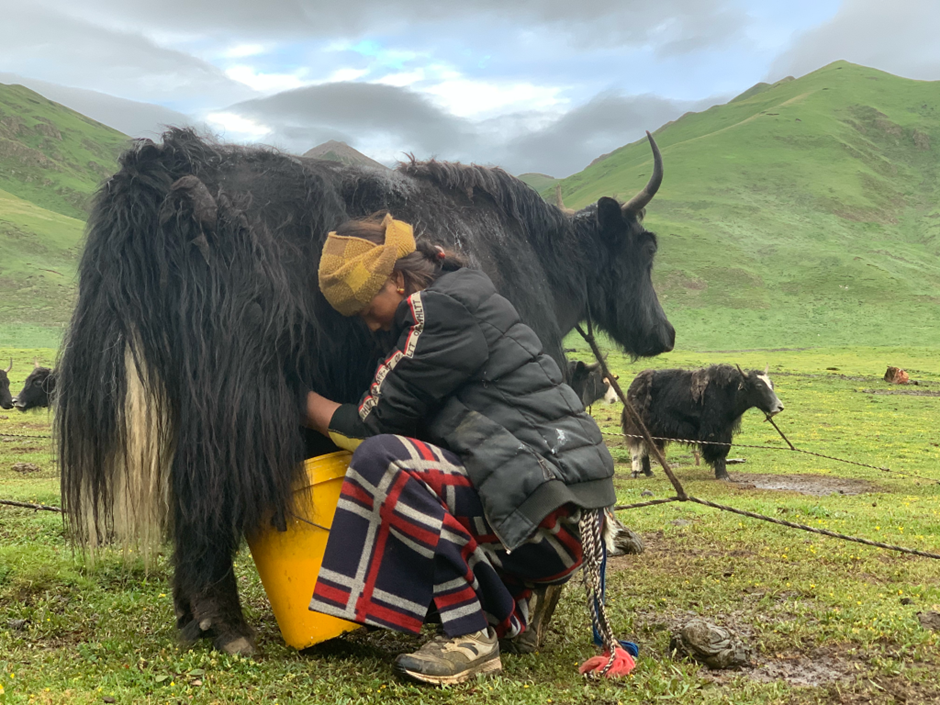
As PASTRES has argued, this causes distortions in the policy debate and results in injustices, with pastoralists being unfairly blamed for environmental destruction. Instead, pastoralism can be a low-impact system, potentially even contributing to carbon sequestration. This is why we argued that taking a more holistic ‘systems’ approach to mitigation is essential, while making sure that data on emission factors are appropriate to the context.
Too often data used by researchers presenting aggregate impacts of livestock on the climate are based on limited sources – mostly industrially produced livestock in contained systems in the Global North. This distorts the picture as the big aggregate figures are highly misleading. Unfortunately, several high-profile publications, data compilation services and media commentators make use of such data to present a picture of livestock’s impact that is undifferentiated and without nuance.
PASTRES highlighted the major misconceptions around livestock and climate change in the major report, Are livestock always bad for the planet? This was launched in Sardinia in September 2021, in advance of COP26. The report was co-published with many partners, and we presented the findings at COP26 with colleagues from the World Alliance for Mobile Indigenous Peoples (WAMIP) at a series of events and a ‘sheep for the climate’ protest on Glasgow docks.
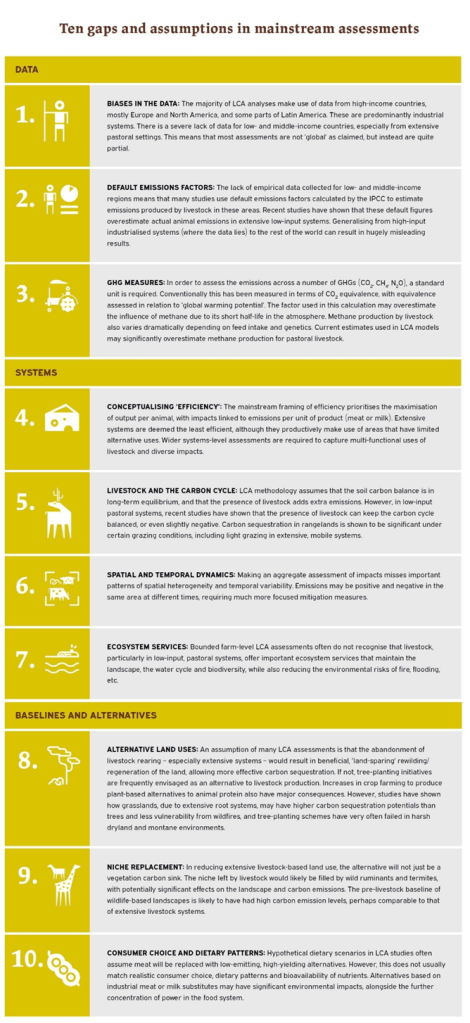
The report comes together with a short film, a series of briefings and some earlier blogs. Together, they try to clarify some of the key themes in the debate, including the ten gaps and assumptions in mainstream assessments that we identified. Hopefully these themes will be taken up during the international year, helping to dispel the myths and misinformation that surrounds this topic.
Unfortunately, because of the way that policy actors become swayed by the aggregate and misleading figures and are influenced by the anti-livestock rhetoric of some media commentators and activists, as well as the attempts by the ‘big meat’ lobby to lump all livestock in together, the current policy debate is often ill-informed and distorted. Cows and cars are simply not the same, as some suggest.
A remarkable coalition of environmental, climate and diet activists, campaigning journalists, and supporters of ‘big meat’ have pointed the finger of blame at extensive livestock production, arguing that to save the climate such production systems must be abandoned, or at least contained and controlled.
This simplistic policy discourse alienates rural livestock keepers, sometimes encouraging them to join regressive populist political movements. The generalised anti-livestock discourse also potentially results in multiple injustices, with major negative consequences for pastoralism and people’s livelihoods, often in very poor and marginalised parts of the world.
The methane debate
Two PASTRES articles – ‘Livestock and Climate Justice: Challenging Mainstream Policy Narratives’ and ‘Livestock, Methane and Climate Change: The Politics of Global Assessments’ – pick up the themes of injustice emerging from the way the science is constructed and how the policy debate currently plays out.
These issues were explored in a webinar with the Institute for Agricultural Trade Policy (IATP) on Livestock Methane: Identifying Gaps to Advance Meaningful Solutions and several PASTRES blogs.
Through its work, PASTRES has made the case for ensuring that pastoralists’ voices are heard in the often very partial climate policy debate, with interventions at recent COPs in Glasgow, Sharm el Sheik and Dubai. This means understanding how livestock keepers make use of their land and how emissions are limited through management practices.
Extensive rangelands cover over half the world’s land surface, and most of this area cannot be used for food production without massive investment. Pastoralists produce animal products for many millions of people from these rangelands with low environmental impact. Instead of being portrayed as climate villains, pastoralists need to be celebrated as guardians of the environment.
Rethinking resilience
This is why thinking about resilience – in relation to climate and other shocks – through the perspectives of pastoralists is essential if appropriate policies are to emerge. Variability in environmental, climate, market, political, and other conditions affects all pastoralists. Living with and from variability is central to pastoral livelihoods, as was discussed in our Pastoralism Primer and open-access book, as well as our paper and associated comic on social assistance and humanitarian response in pastoral areas.
There is much discussion in development circles about enhancing ‘resilience’ in pastoral areas. But what does this mean? With ‘resilient’ pastoral development top of the agenda for the 2026 international year, this is an important question.
Multiple meanings of ‘resilience’
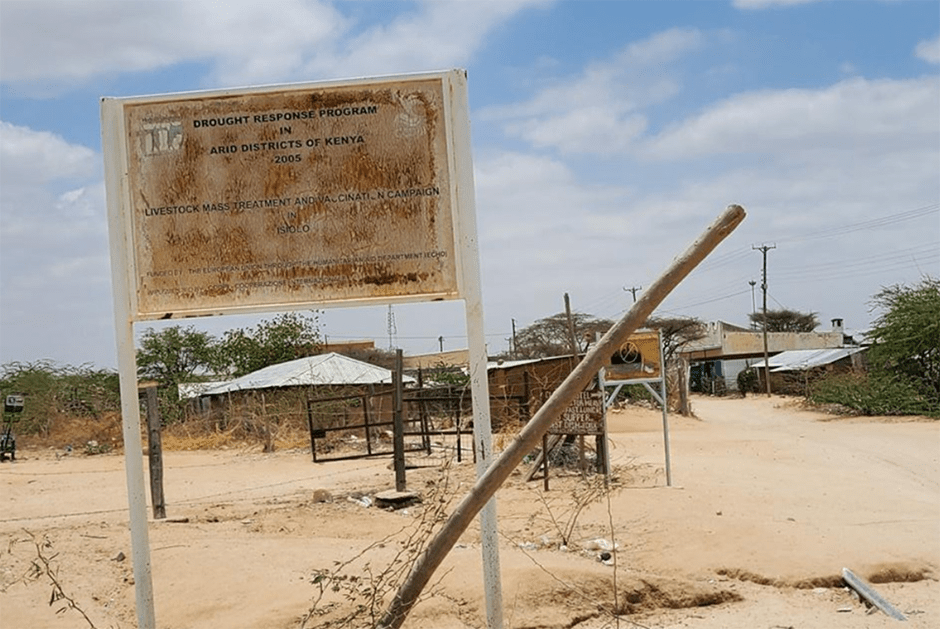
Too often, such resilience programmes take the negative narratives about pastoralism and argue that the best thing to do for pastoralists is to seek alternative livelihoods outside pastoralism, rather than investing in improving the capacities of pastoralists to respond to shocks and stresses. In our view, resilience should not be seen just as ‘bouncing back’ to a previous state but always adapting and transforming in ways that new conditions are accommodated. Crucially, this requires building on networks and relationships and the social fabric on which pastoralism is built. This is why our focus is on what we call ‘relational resiliences’.
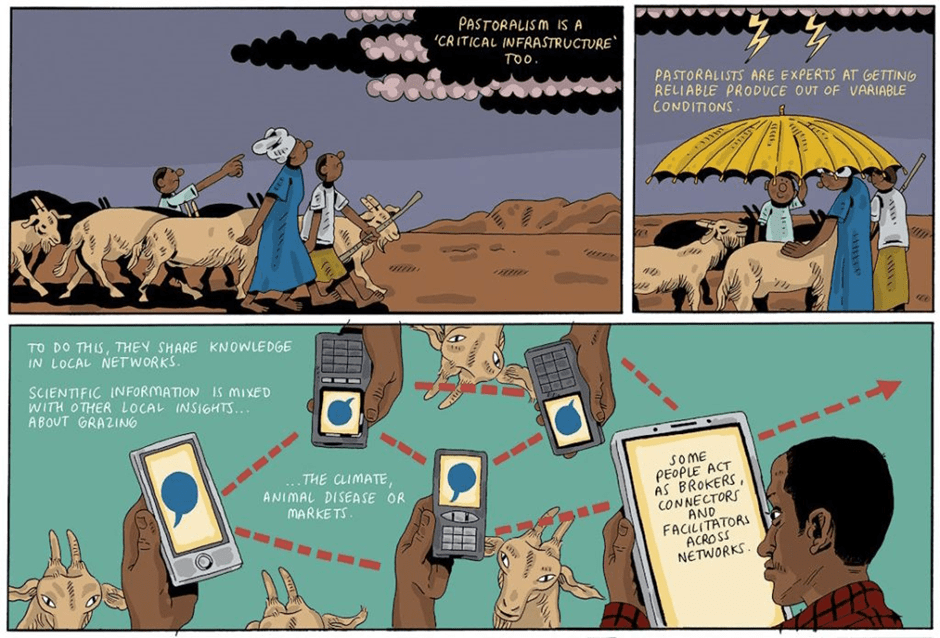
Relations and networks are central to assuring the reliable flow of goods and services coming from pastoralism. Seeing pastoralism as a ‘critical infrastructure’ as explained by Emery Roe in a PASTRES Working Paper, highlights the parallels with other systems where ‘reliability professionals’ must respond to high levels of variability in inputs and ensure a relatively stable supply of outputs. The skills of reliability professionals – whether in electricity supply systems or pastoral systems – include scanning the wider horizon, testing out scenarios, and responding in real-time to uncertainties while avoiding the dangers of surprise and ignorance.
Such skills are important in anticipating and responding to droughts, market shocks, conflicts, and so on in pastoral areas, and very often, there are particular individuals in communities that people turn to. Such individuals, though, never work alone. They are connected to others who have different knowledge, complementary skills, sources of finance, and technology that can help respond to a disaster, as we found out when looking at responses to diseases in northern Kenya. Such reliability networks, therefore, work continuously to avert disasters in the face of unfolding, uncertain situations.
Building resilience from below
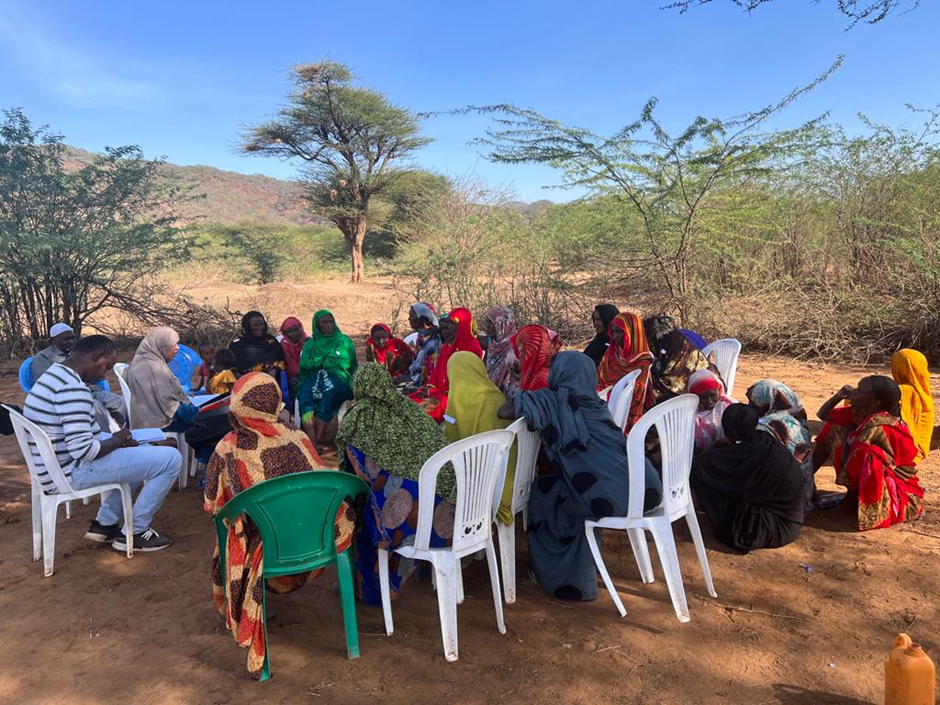
Such an approach to building resilience and the capabilities for generating reliability are seen across pastoral settings, as we found in northern Kenya. Building such approaches from below is very different from the standard approaches to drought early warning, anticipation, and early action and disaster response we see pushed in countless projects by donors and governments in pastoral areas. These are premised on the assumption that it is external intervention and the modelling and tracking of risk that are important, and through this, early warnings can be generated and disasters avoided.
The problem is that such programmes rarely work: the information generated is not used, the early warning systems are not trusted, and the interventions proposed – as discussed already – do not support pastoralists’ own reliability generation practices. Instead, too many climate adaptation and resilience-building responses encourage a movement out of pastoralism towards ‘diversified livelihoods’. This, in turn, may not increase resilience but can result in increased vulnerability, for example, through reliance on irrigated agriculture.
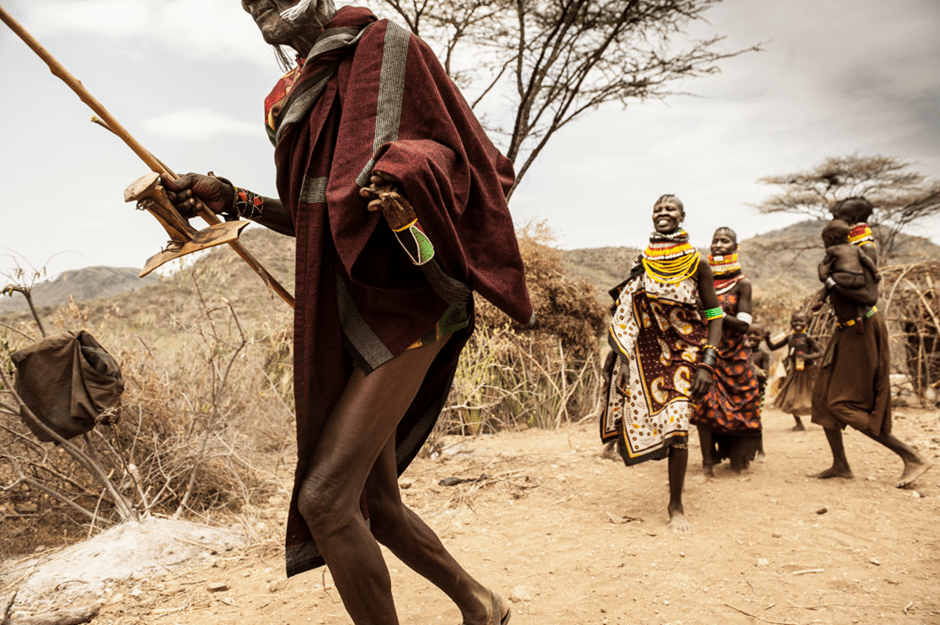
An understanding of resilience in pastoral systems requires a focus on resilience as a process, built through relationships, as discussed in the Epilogue to the book ‘Reconsidering Resilience in African Pastoralism: Towards a Relational and Contextual Approach’ co-edited by PASTRES affiliate, Greta Semplici and as explained in her book, Moving Deserts. Such processual forms of resilience support a flexible, mobile livelihood where shocks and stresses are ‘normal’ and must be responded to continuously, as described for Turkana in northern Kenya where resilience is discovered ‘on the move’.
Resilience is therefore not a physical system property; instead, resilience is always embedded in social relations, cultures, and identities, along with wider socio-political relations. Resilience is created through the actions and practices of reliability professionals and others, within networks, as part of an ongoing process of transformation. Resilience emerges from the continuous reconfiguration of relationships, both human and non-human, and between people, labour, rangelands, herds, and flocks.
Rethinking resilience
Major investments are required to help pastoralists adapt to climate change alongside other challenges. Unfortunately, such projects are too often poorly directed and may even undermine adaptation responses. Instead, efforts need to be linked to pastoralists’ own resilience-building strategies and be rooted in the practices of local reliability professionals and their relationships and networks.
PASTRES work, therefore, suggests an approach to resilience – and responding to climate change – that is more attuned to pastoral practices and contexts. These are important lessons for the UN International Year for Rangelands and Pastoralists.
_________________
Explore PASTRES work on climate change and resilience:
See the exploration of ‘shocks and stresses’ in the PASTRES photo exhibition, Seeing Pastoralism: an-uncertain-world – Seeing Pastoralism
Check out our free online course and the session on climate change, 15: Livestock and climate change – Pastoralism, Uncertainty and Resilience – PASTRES
This is the fifth PASTRES blog in the series celebrating the 2026 UN International Year of Rangelands and Pastoralists

