by Ian Scoones
This is the ninth in a series of blog posts that bring together PASTRES work from 2018-2023 around a number of themes. In this post, we discuss the theme of agrarian change.
To read through our archive on this theme, click on the link at the end of this post.
An important theme running through PASTRES work is an understanding of patterns of livelihood change over time.
Locating this within a framework of ‘critical agrarian studies’, we can see that pastoralists must confront many of the same challenges that settled peasant societies must also face, but they have important skills for living with and from uncertainty that others can learn from.
Uncertainty and agrarian change
This argument is developed in several papers, including ‘Pastoralists and peasants: perspectives on agrarian change’ and ‘Confronting uncertainties in pastoral areas: transforming development from control to care’.
Too often, a ‘sedentist bias’ obscures how pastoral systems are understood, as people interpret things from the perspective of settled societies. Yet what were once stable, settled communities – small-scale farmers, for example – have to adapt to changes in land use, shifts in livelihood opportunities, and encroachments on territories in just the way pastoralists do. The importance of mobility – so central to pastoral livelihoods – is also increasingly significant in peasant societies, as people move for work, providing remittances back home.
A webinar, co-hosted with the Transnational Institute, discussed these themes, aiming to define some of the key lessons for agrarian studies from PASTRES work.
Moving beyond a sedentary framing has important implications for research methodology, as explored in an important special issue of Nomadic Peoples by PASTRES researchers. A mobile perspective means engaging with fluidity, multiple spatial scales, and temporalities, as we uncover the complex entanglements of people, livestock, and landscapes. Classic agrarian analyses of land, labour, and capital must take on new forms. Land is not fixed and bounded, associated with defined forms of property, as PASTRES work has highlighted.
The labour for pastoral herding may come from family and wider kin or clan connections, or from migrant labourers, who may come seasonally or for longer periods. What’s more, the core forms of capital for pastoralism – livestock – do not produce streams of income in the same way as crops in a field do, and crucially they also reproduce.
Accumulation dynamics
For this reason, the dynamics of accumulation in pastoral settings differ from those in more predictable, stable, and settled agrarian settings.
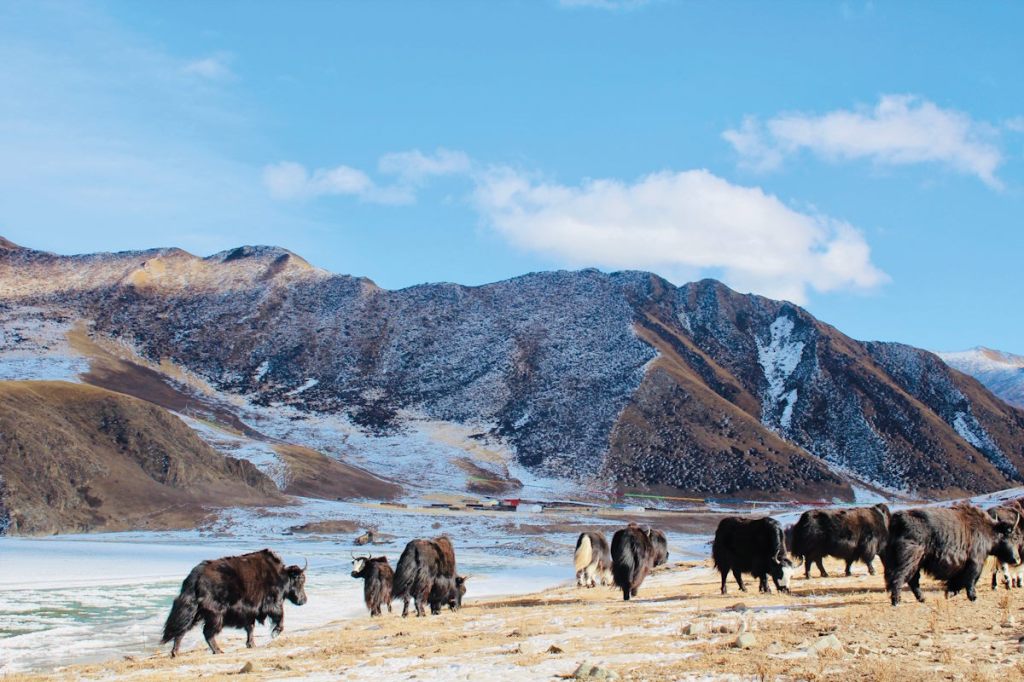
The booms and busts of livestock populations are driven by the non-equilibrium dynamics of rangeland ecology, so accumulation patterns are uneven over time. Reversals due to drought mortalities come on the back of periods of rapid herd and flock growth in good years. Such dynamics are in turn affected by the availability of labour for herding and livestock management, which in many areas is a major constraint, as generational shifts mean that people are leaving pastoral areas.
Some richer pastoralists can insulate themselves from such variability by purchasing feed, hiring labour and so on. But for most, accumulation dynamics, and so patterns of social differentiation within pastoral societies, mirror the variability of the wider context. This is in turn affected by climate change – and indeed, it’s affected by the ‘solutions’ to climate change that are imposed on pastoral areas, as a major open access book on climate change and critical agrarian studies explores.
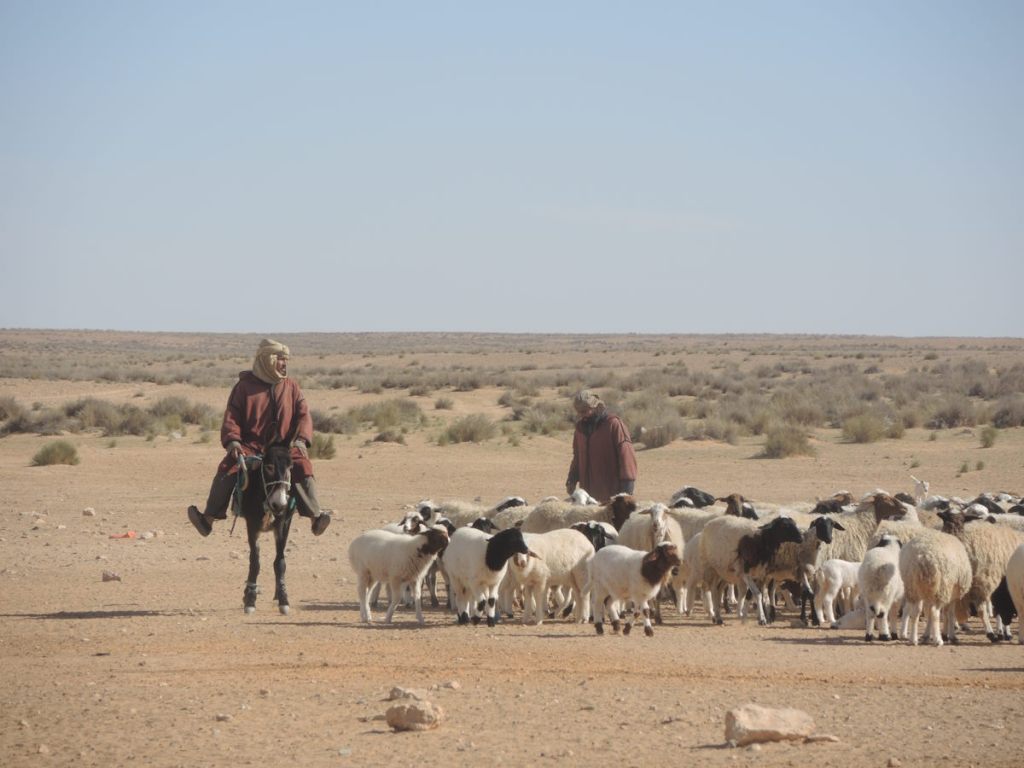
PASTRES research in southern Tunisia highlighted this dynamic and pointed to the importance of wider collective institutions of resource management – linking herding labour with access to land – as a way that people could ensure accumulation from their flocks when conditions were so variable. The khlata acts to offset some of the impacts of variability that might be felt by individuals through the collective arrangement. This is especially important for absent migrants, who are able to accumulate even when they are not directly managing their animals.

Despite the contrasts, there are many similarities between pastoralists and peasants, which are often not appreciated. As discussed in the Pastoralism Primer (section 2), this is important for solidarity, mobilisation, and wider mutual understanding between groups.
Just as in peasant societies, accumulation processes are uneven, with differentiated outcomes across communities, households, and between people of different genders, ages, ethnicities, and so on.
Unlike the mythical, romantic view of pastoral societies being equitable and homogeneous, this is not the case, as contributions to the now open-access book, Pastoralism and Development in Africa: Dynamic Change at the Margins reveal.
Pastoral politics
Pastoral elites are increasingly significant in resource politics in pastoral areas. Sometimes this relates to the expropriation of land from common use, in alliance with commercial companies or the state, as part of ‘land’ or ‘green’ grabbing.
The implications of the expansion of the capitalist frontier through large-scale global investments for pastoralism are discussed both in the book, Land, Investment and Politics: Reconfiguring Eastern Africa’s Pastoral Drylands, and PASTRES blogs on the consequences of land grabbing and development interventions in Senegal. Such grabs may result in dispossession and displacement, as has been happening in Maasai areas of Tanzania due to hunting and conservation investments.

Pastoral elites may become incorporated into state structures through processes of state decentralisation and become distant from local societies. Sometimes they may be ‘absentee’ herd owners who hire in labour. This ‘semi-proletarianisation’ of pastoral settings – or what PASTRES affiliate Matteo Caravani calls ‘depastoralisation’ – of course has echoes of peasant societies, as multiple ‘classes of labour’ become visible, with diverse livelihoods emerging beyond farming and livestock-keeping.
The classic case of an agrarian transition suggests that such processes will result in the emergence of a dominant capitalist class able to extract surplus, and so continue processes of accumulation through the capture of private property and the exploitation of labour.
Some analysts of changing pastoral systems identify such transitions from cattle to capitalist ‘logics’ and from extensive, mobile pastoralism to fixed, settled ranching. However, in a contribution to a debate in Current Anthropology, Ian Scoones (p. 18) argues that such shifts between ‘ideal type’ production systems are not so neat.
While pastoralism is undoubtedly changing, and absentee owners’ capture of land for ranches and increasing commercialisation of production by some is occurring, it may not be as clear-cut as some classic models suggest. Instead, new forms of ‘ranching’ – outwardly, apparently more settled and commercialised – necessarily have to include patterns of mobility and hybrid land uses for livestock production to thrive given the nature of such environments.

Beyond sedentist biases
In sum, understanding agrarian change through a pastoral lens requires an appreciation of variability and uncertainty, combined with a ‘nomadic’ sensibility. This in turn encourages us to move away from ‘sedentist biases’ in much agrarian analysis.
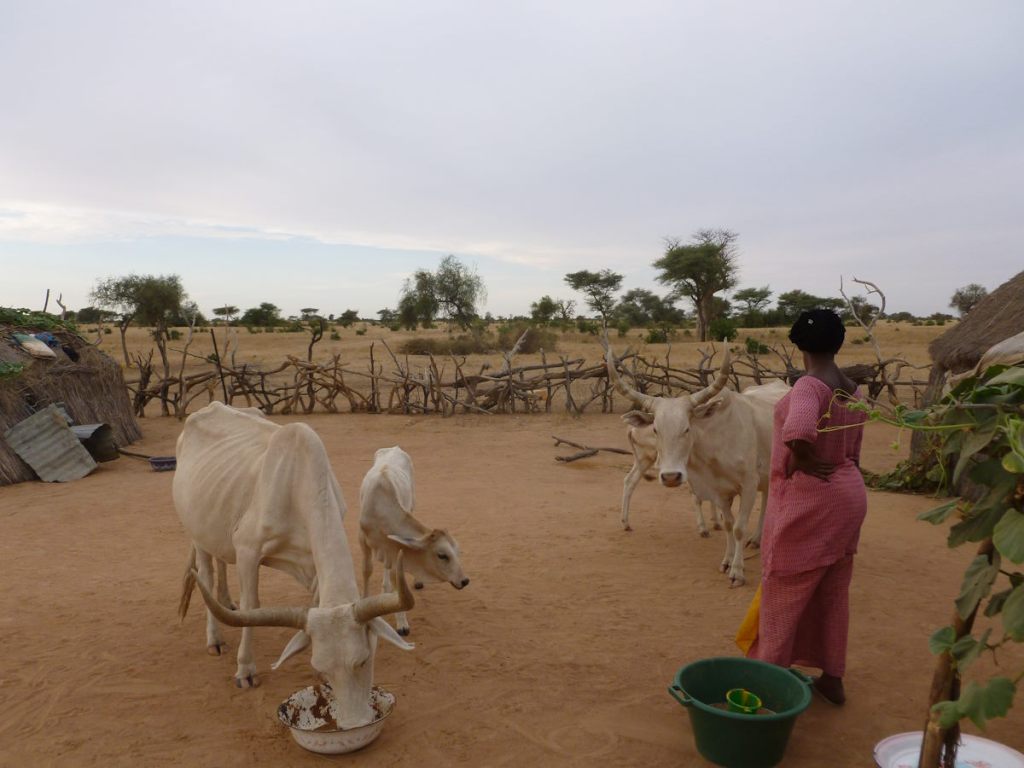
While we see processes of accumulation and differentiation as pastoral societies integrate with wider capitalist processes, how this turns out may not be the same as in farming settings. This is because the requirements for mobility, hybridity, and flexibility persist, suggesting particular pastoral forms of agrarian change with less predictability, linearity, and fixity and more reliance on collective arrangements for land and labour.
Explore our work on agrarian change
Click on the button to explore the archive of PASTRES work on this theme.
 Pastoralism, Uncertainty and Resilience - PASTRES