

Armed violence, banditry and insurrection were long associated with pastoralism. Pastoralists have been (and often still are) viewed as a threat to neighbouring sedentary societies, an impediment to state formation and the extension of centralised power, and a menace to peaceful development. The lecture by Jeremy Lind reviews perspectives on the causes of conflict – from resource scarcity thinking to perspectives on ‘greed and grievance’ – and considers their suitability to understanding conflict in pastoralist contexts.
Early ethnographies glorified customs of warfare and warriors in pastoralist society, perpetuating the notion of a backward and violent social order in need of pacification. State violence against pastoralists was justified as part of a civilizing mission to bring peace. Unsurprisingly, state institutions were not trusted. The state’s presence was minimal at the frontier, where day-to-day governance was usually the domain of hybrid structures, involving customary authorities, local government and non-state actors like temples, mosques and prominent local businesspeople all performing state-like functions.
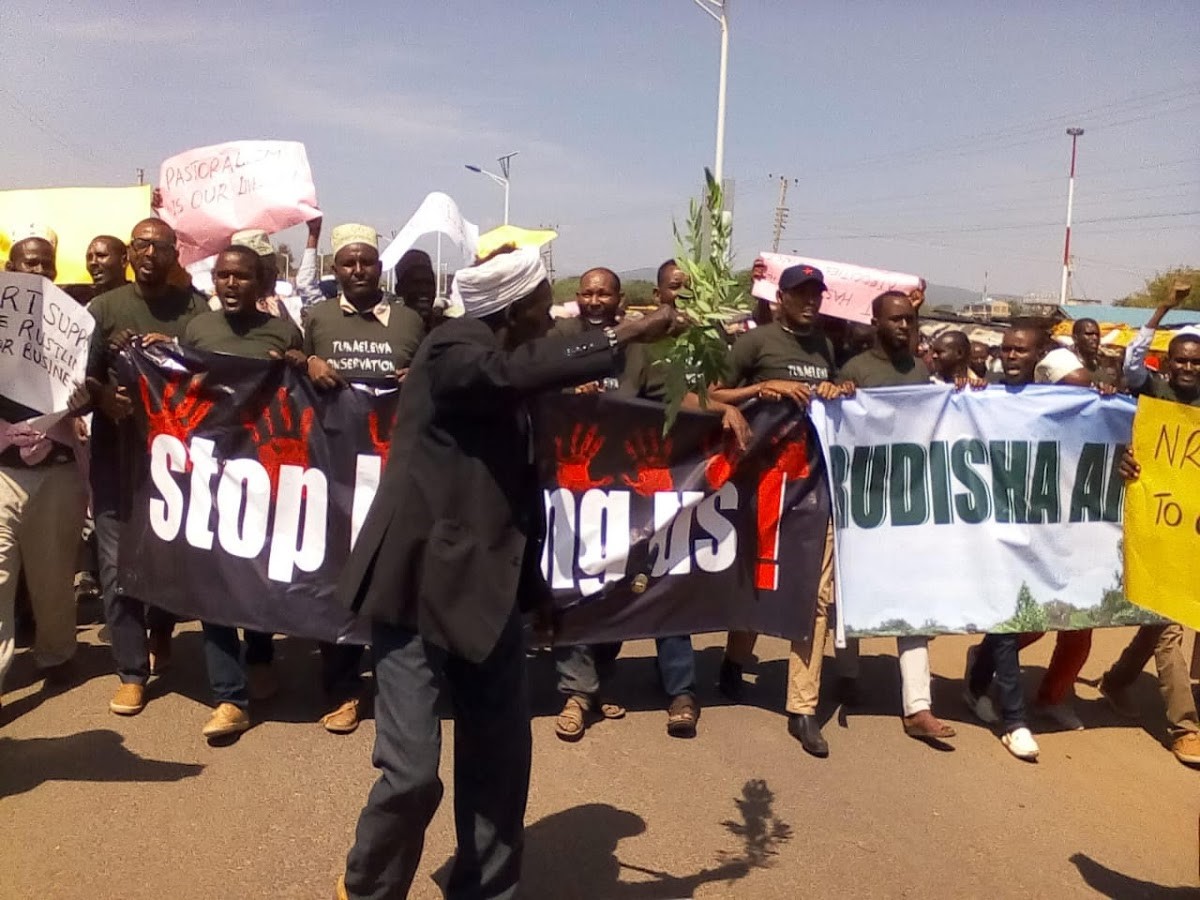
Renewed state interest in pastoral areas – such as through infrastructure corridors and extractive developments – makes it essential to understand the political economy of governance in pastoral areas. The lecture considers how states might extend power in new settlements: by co-opting sub-national elites – extending a model of patronage evident in a wider political system; through devolution and the establishment of sub-national administration; by imposing state security and representatives of centralised administration; or through focusing only on privately-secured, high-value enclaves.
 Watch the lecture
 Questions
Taking a pastoralist context that you are most familiar with:
- What is the nature of conflict that is happening now or in recent history?
- What factors do you think are important in explaining these conflicts – resource/climate, socio-cultural, political economy, greed or grievance?
- How have state-society relations changed over time?
- Does expanding or deepening state power in pastoralist areas inevitably lead to greater conflict?
 Readings
- Abdi, A. and Lind, J. (2018) The changing nature of local peacebuilding in Kenya’s north-eastern borderlands. Accord Insight, 4.
- Benjaminsen, T.A., and Boubacar, B. (2019) Why do pastoralists in Mali join jihadist groups? A political ecological explanation. Journal of Peasant Studies, 46: 1-20
- Benjaminsen, T.A., and Boubacar B. (2009) Farmer–herder conflicts, pastoral marginalisation and corruption: a case study from the inland Niger delta of Mali. The Geographic Journal, 175: 71–81.
- Galaty, J. (2016) Boundary-making and pastoral conflict along the Kenyan–Ethiopian Borderlands. African Studies Review, 59: 97–122.
- Goodhand, J. and Meehan, P. (2018) Spatialising political settlements. Accord Insight, 4.
- Greiner, C. (2013) Guns, land, and votes: Cattle rustling and the politics of boundary (re)making in Northern Kenya. African Affairs, 112: 216-237.
- Hagmann, T. and Mulugeta, A. (2008) Pastoral conflicts and state-building in the Ethiopian lowlands. Africa Spectrum 43: 19-37.
- Korf, B., Hagmann, T. and Emmenegger, R. (2015) Re-spacing African drylands: territorialization, sedentarization and indigenous commodification in the Ethiopian pastoral frontier. Journal of Peasant Studies, 42(5): 881-901.
- Leonard, D.K. and Samantar, M. (2013) Reconstructing political order among the Somalis: the historical record in the south and centre. IDS Bulletin, 44(1), 4-52.
- Lind, J., Okenwa, D. and Scoones, I. (eds.) (2020) Land, Investment and Politics: Reconfiguring Eastern Africa’s Pastoral Drylands. Woodbridge: James Currey (Chapter 1 – open access (PDF) / Full text – available to purchase)
- Luckham, R. and Kirk, T. (2013) The two faces of security in hybrid political orders: a framework for analysis and research. Stability: International Journal of Security and Development 2, 2.
- Meagher, K. (2012) The strength of weak states? Non‐state security forces and hybrid governance in Africa. Development and Change, 43: 1073-1101.
- Watts, M. (2018) Frontiers: authority, precarity and insurgency at the edge of the state. World Development, 101: 477–488.
Photo credit: Hussein Salesa
 Pastoralism, Uncertainty and Resilience - PASTRES