by Ian Scoones
This is the sixth in a series of blog posts that bring together PASTRES work from 2018-2023 around a number of themes. In this post, we show the importance of markets for pastoralists.
To read through our archive on this theme, click on the link at the end of this post.
Pastoralists are always involved in markets. Selling animals and their products is an essential part of any pastoral livelihood, and many pastoralists are involved in long-distance, globalised trade, trekking animals over long distances or selling to traders who move animals to terminal markets many thousands of kilometres away, often in different countries. The livestock trade in the Greater Horn of Africa, for example, contributes to billions of dollars of revenue, both for states and others involved in marketing, as well as sustaining livelihoods across the region.

The reality of pastoral markets challenges the assumptions that pastoralists are not interested in selling their animals; that they have a ‘cattle complex’, which means, that they hold on to animals for cultural value; and that market-based revenues are not important for ‘subsistence’ livelihoods. The standard response often takes on these biases and urges the ‘modernisation’ of marketing to ensure that pastoral marketing is more efficient and profitable. New markets with fancy facilities are constructed and these are supposed to boost incomes and reduce poverty in pastoral areas.
Sadly, the underlying narrative that justifies such a response is deeply flawed with the result that most such interventions result in a growing graveyard of failed marketing efforts. Meanwhile, pastoral marketing continues across pastoral regions, often in very vibrant ways involving massive transactions overall. This mismatch was studied during the PASTRES research as we tried to understand the ‘real markets’ of pastoral areas. By this we mean the markets that are embedded in social relations, cultural values, and networks across pastoral areas, rather than the technocratic impositions from outside.
Real Markets in Sardinia
Giulia Simula’s research in Sardinia, Italy explored the diversity of markets that pastoralists use across different sites, from remote mountain villages to the more connected plain areas. She found that most pastoralists combined different markets, selling some of their sheep milk to cooperatives and local processing factories, which sell to international markets, mostly industrial Pecorino Romano cheese for export to the US and elsewhere in Europe.
Meanwhile, others opted for investment in new mini-dairies for the production of premium cheese products for sale across networks of tourist shops, restaurants, and further afield. Nearly all pastoralists retained some of their milk production for the local production and sale of cheese (for more on this, see Giulia’s doctoral thesis).

Such marketing strategies are allied to different pastoralist livelihoods – some are highly specialised and increasingly commercialised where investment in equipment and skilled labour is essential, while others see their milk and cheese production as part of a much more diversified set of livelihoods, with pastoralism being sustained through a range of activities, both on and off their farms.
All these strategies are ways of responding to highly variable milk prices, both in global and local markets. This variability has to be hedged against, either by increasing efficiency and reducing cost or by diversifying so as not to be so reliant on a single product.
Across all these intersecting milk and cheese value chains, market relations are embedded in social and cultural relations. People often sell to people they know through contracts based on trust and mutual understanding. The market chain is managed not just in terms of profit and loss, but in terms of relationships and wider politics, with pastoralists protesting when prices crash. Understanding the social, cultural, political, and relational dimensions of ‘real markets’ is therefore essential.
Transforming market relations
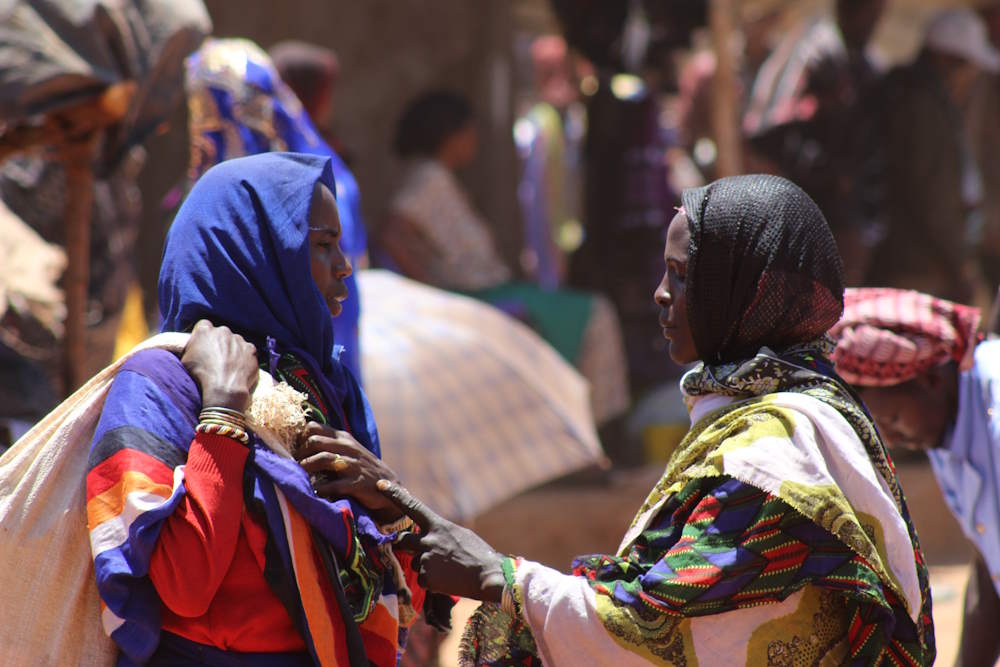
These insights from Sardinia are relevant in all PASTRES sites. For example, as the country lead for Kenya, Hussein Mahmoud has shown it is not the large, organised markets that are the most important, but often the smaller, bush markets where animals can be exchanged with traders and other intermediaries based on kin, clan, and ethnic affiliations.
PASTRES studies of camel milk marketing in northern Kenya by Michele Nori shows how market reliability is enhanced by strong social relationships between the women involved in producing, processing and selling milk, facilitated by key actors, such as motorcycle transporters, who ensure a reliable supply of milk to end markets. Demand for camel milk both in Kenya but also globally has grown hugely in recent years, driven in particular by ethnic Somali populations in Nairobi and beyond, but also by the marketing of camel milk as a health and medicinal product.

Changing market conditions in turn have resulted in shifts in production system (more camels) and location (linking to towns) as well as a whole array of service providers from transporters to those who process and chill the milk, and then subsequently sell it through a network of traders.
In this case, the growth of a pastoral market for camel milk has transformed the system, with important benefits for particular groups, notably women, particularly of Somali origin.
It is the socio-cultural basis of the market that explains its success, and in comparisons with externally imposed projects that identify camel milk as an important route to ‘diversification’, the enterprises that emerged from the community are far more successful.
Lessons for bankers
Markets are always social, cultural, and political. Simplistic analyses of supply and demand, price and cost leading to standardised market interventions are inadequate. As PASTRES work shows, pastoralists are highly engaged in vibrant markets, but these must be understood as ‘real markets’ embedded in context.
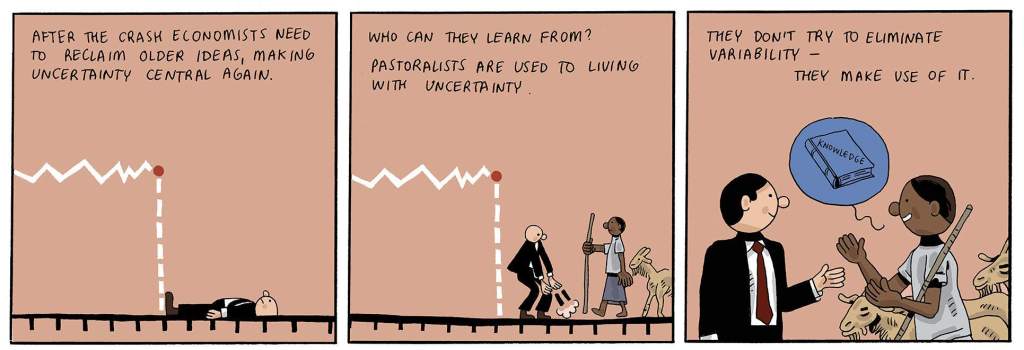
This, as our research shows, has major implications for development policy and for thinking about how markets work in practice, with important lessons for bankers, financiers, and economists more generally from understanding how pastoral markets work in uncertain contexts.
Explore our work on markets
Click on the button to explore the archive of PASTRES work on this theme.
 Pastoralism, Uncertainty and Resilience - PASTRES