by Ian Scoones
This is the fifth in a series of blog posts that bring together PASTRES work from 2018-2023 around a number of themes. In this post, we explore the theme of land and resources.
To read through our archive on this theme, click on the link at the end of this post.
A core theme of PASTRES work has been exploring what forms of land use and tenure make sense given highly variable rangeland systems and the need for mobility.
Much debate about land governance focuses on whether ideal type systems of private, state, or communal tenure are the most effective. Instead, we find that hybrid land governance, with overlapping institutions operating across complex land mosaics, is the most appropriate for sustaining (at least partially) mobile forms of pastoralism.
This means the assembling of hybrid institutions, often with complex characteristics of both private, state, and communal forms, as well as maintaining ‘fuzzy’ and flexible boundaries between tenure types.
Hybrid Rangeland Governance in Amdo Tibet
Our work in Amdo Tibet in China by Palden Tsering and Gongbu Zeren highlights this well. Through processes of reform, the Chinese state has encouraged a household responsibility system that creates a form of private tenure regime, even if land is still maintained under state ownership. Individual land allocations for grazing in winter and summer pastures are made to carve up a previously open landscape.
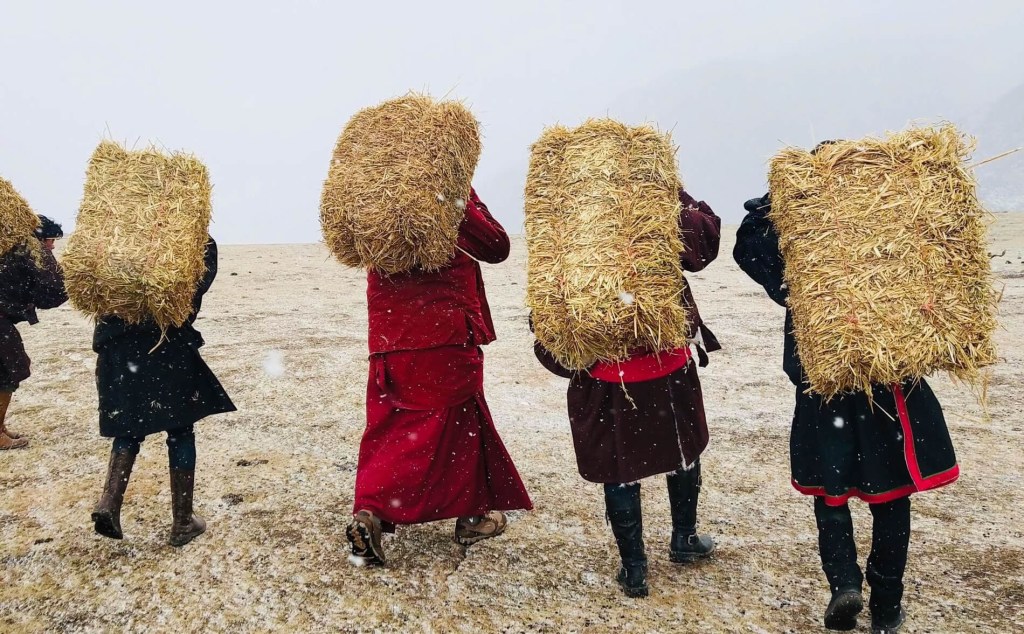
This means that different households are allocated plots of different value for grazing in different seasons, and when disasters strike – like heavy snowfalls – as they inevitably do in non-equilibrium systems, people struggle to maintain grazing. They must then resort to expensive forms of fodder purchase, often based on new credit systems, when in the past, movement between community lands would have been the response.
However, to confront these challenges, people have invented new hybrid systems where forms of common resource use are retained, with arrangements made between individual households. Studies show that such hybrid systems assure the highest productivity, have the greatest levels of biodiversity and are the most effective in adapting to climate change.
In Amdo Tibet, hybrid forms of land governance involve multiple institutions, combining those from the state, community, and monasteries in the area. People with different forms of authority can then negotiate rules around rangeland use and govern how new investments – including infrastructure, tourist facilities, and conservation areas – are managed and integrated within local rangeland systems.

Negotiating land control across diverse actors, the research provides a more effective route to integrating diverse and competing land uses at the local level and ensuring that pastoralists’ interests are at least partly accommodated.
Institutional Innovation
A hybrid land governance approach to mosaic land systems is a different approach to assuring land tenure security for pastoralists than the more popular approach of fixing boundaries through land registration approaches, including participatory approaches to land mapping.
We have seen such community registration facilitated by NGOs and community land groups in our sites in Gujarat, India and northern Kenya. While this may assist with asserting rights against wholesale encroachment, if upheld by the legal system, the danger is that such approaches do not reflect the more messy, negotiated reality, that is, the reality for living with and from uncertainty through mobility and flexible use of diverse landscapes. Fixing boundaries, defining territories and so on can act to undermine such flexibility so crucial for livelihoods.
In confronting the realities of increasing encroachment of pastoral lands and the changing patterns of mobility that result, land use institutions must also evolve. There is much institutional innovation going on, as we saw in Amdo Tibet, whether around land use and range management or credit and loan systems.
In southern Tunisia, new institutional arrangements around collective use of land and management of sheep flocks are emerging as a result of the long-term pattern of human migration out of the area. As people leave to work in big cities within Tunisia or abroad, they do not lose connection with their villages or their animals, but they must rely on new institutional arrangements for herding and gaining access to grazing for their animals, establishing new uses for the collective commons.

The institution of the khlata, described by Linda Pappagallo, is changing to allow for migrants to hold animals in collective flocks managed by a hired herder. This land-labour institution is therefore crucial for new forms of pastoralism in the area that accommodates new livelihood patterns.
Land Control as a Process
Land is a vital resource for pastoralism, but flexible use and dynamic, hybrid institutions are also essential. As both styles of pastoralism and land use change, so must forms of land governance. Relying on old, fixed forms of land use – whether state, private, or bounded commons – is inadequate, and a more process-oriented approach to land control is required, focused on power dynamics, social relationships, and continuous negotiation, that takes account of the changing realities of pastoral areas.
Explore our work on land and resources
Click on the button to explore the archive of posts on this theme.
 Pastoralism, Uncertainty and Resilience - PASTRES