By Rashmi Singh, Suraj Pratap Singh Bhati, Ryan Unks, Greta Semplici & Pablo Manzano
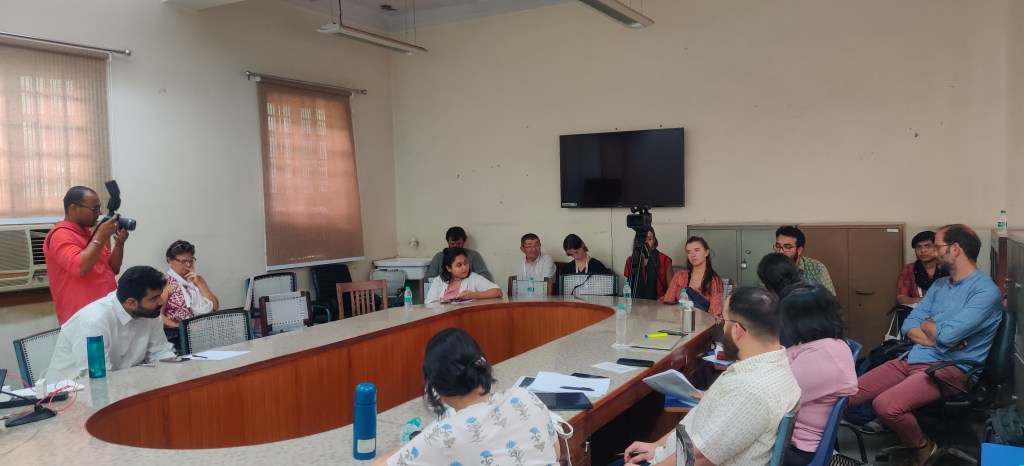
Panels on South Asian and Latin American pastoralism were among the sessions at this year’s International Union of Anthropological and Ethnological Science Conference (IUAES), held from 14 – 20 October in Delhi, India. The conference, with the theme, ‘Marginalities, Uncertainties, and World Anthropologies: Enlivening Past and Envisioning Future’, attracted numerous panels focused on nomadic communities and pastoralists all over the globe.
PASTRES affiliate researchers organised three panels at the conference as part of the many sessions supported by the Commission for Nomadic People (CNP). These included Pastoral Marginalities and Uncertainties in Latin America Today, by Greta Semplici and Pablo Manzano; Modernities, Mobilities and Uncertainties, by Natasha Maru and Diksha Narang; and Pastoral Mobilities and Ecological Variabilities: Responses to Socio-Political Stressors and contextual Adaptabilities in South Asia, convened by Rashmi Singh, Suraj Pratap Singh Bhati and Ryan Unks.
In this post, we discuss the important themes and debates that were explored in our panels.
Pastoralism in Latin America
The panel chaired by Greta Semplici and Pablo Manzano, Pastoral Marginalities and Uncertainties in Latin America Today, is the first attempt in an international venue to give representation to Latin American pastoralism – which has long been a silent voice among scholars of pastoralism.
The panel was born out of the desire to fill a gap: we know very little about the state, the entity, or the socio-ecological and economic practices of pastoral groups in the broad Latin American region.
With this panel we started exploring the region’s context to provide an overview and a preliminary synthesis of the different pastoral systems in the region. The goal was to formulate knowledge about pastoralism today, its challenges and contributions, struggles over access to, and control of, land and resources, and assess ingredients for its future sustainability.
The panel is the result of a Latin American journey, from Mexico to Argentina, supported by the PASTRES programme and by the International Union of Biological Sciences (IUBS). The research brought to light deep wounds – in some cases new, in others long-standing – that are challenging the sustainability or the very existence of pastoral practices today.
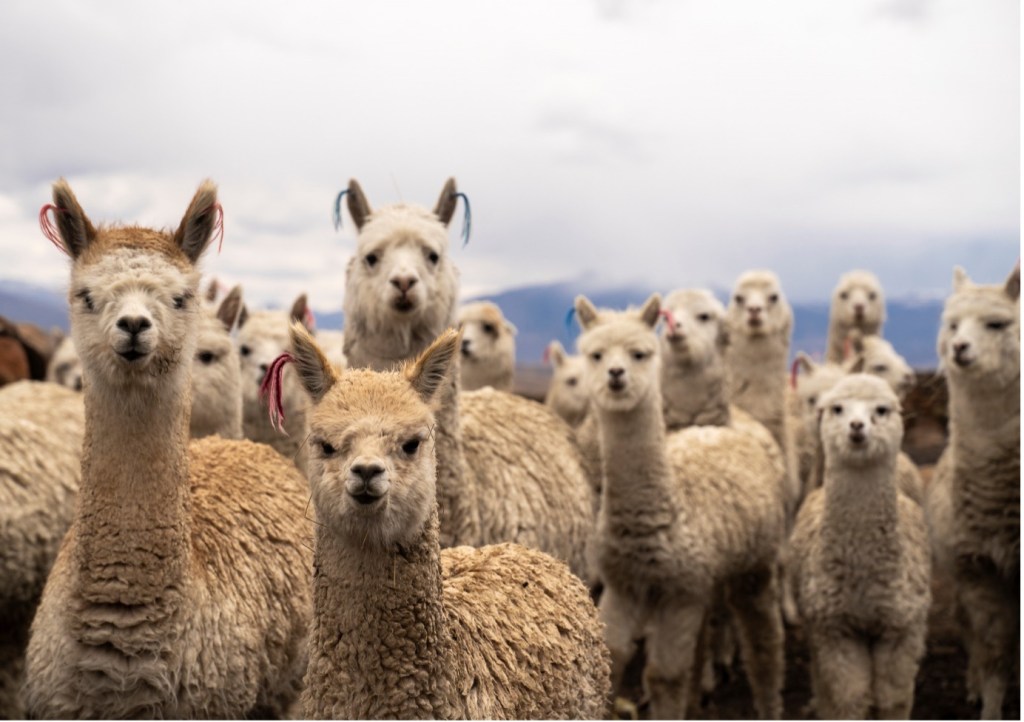
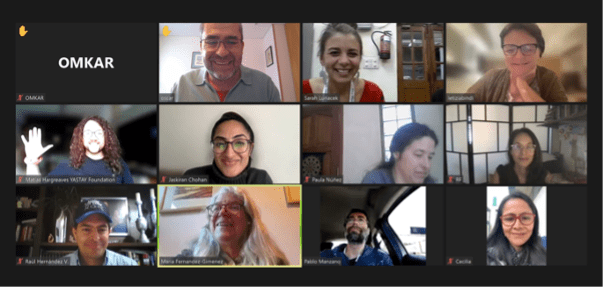
Out of the urgency to make pastoral groups in Latin America visible and heard, 11 presenters, including academics and professionals from the region gathered to present the situation in their respective countries.
Colombia and Panama
A first session of the panel focused on the central parts of the region, Colombia and Panama. Challenges presented by conservation programs, agricultural expansion and the rise of sedentary lifeways were discussed, alongside the impacts of cattle-raising on deforestation and transformation of the forest into pasture – i.e. the two sides of the pastoral debate in Latin America.
On the one hand, pastoral rangelands are being grabbed away from pastoral groups in favour of crop farmers or other forms of land use such as energy and mining projects, land spared for conservation, or industrial development, leading to the marginalization of pastoralists. On the other hand, forest land is transformed into tools of state control and domination at the expense of local populations and their culture.
Pastoralism in the Andes
The second session of the panel travelled across the Andes, through Chile, Peru and Argentina, and also included a comparison with the Italian Apennines.
Pastoral mobilities are also important in these environments, and pastoralists contribute both as custodians of highly remote lands at risk of expropriation, and as agents of conservation. Pastoral practices of resistance and adaptation were identified as crucial for the future of the livelihood.
Pastoralism in Patagonia
A final session discussed two faces of pastoral processes in Patagonia. Pastoralism clashes with conservation goals in the Argentinian national parks, with “post-frontier” actors (tourism, conservation, extractives) in Chile which results in land grabbing, limiting the possibilities for sustainable livelihood practices.
Challenges for Latin America
The final presentation was given by the chairs of the panel with the goal of offering a preliminary synthesis of the different pastoral systems in the Latin American region, identifying challenges of pastoral practices today. These include:
- struggles over access and control of land and resources given by the “post-frontier” actors, borrowing the expression used by one of the presenters;
- socio-demographic factors including aging, family splitting, and the migration of the youths;
- loss of mobility associated with rising sedentary cultures and the fencing of lands;
- high levels of insecurity and conflicts which endanger rural lifeways.
From the long journey across different contemporary pastoral systems in Latin America, it was also possible to reflect on key elements for the future. In particular, we identified the Colombian cases as the most vibrant, sustainable, and future-oriented. What clearly characterizes these cases is the strong relational and identitarian dimension, which seemed to be well preserved in Colombia, both in an indigenous community (Guajira) and in a creole one (Llanos).
This feeling of solidarity is not strictly linked to the origin of a population. Rather, it’s about the adaptation of the corresponding culture to the specificities of the territory inhabited, through knowledge and attachment to place, and the sharing of it with others that form a community or an alliance.
It ultimately emerges that the role of identity, social relations, extensive collaboration and alliances are, among other factors, an important ingredient for the sustainability of Latin American pastoral communities. This is also true in other countries around the world. Rebuilding strong pastoral communities, and fostering a shared identity and rootedness in the territory, is essential for the long-term sustainability of these practices.
Conservation and development efforts in the pastoral sector must address these social and cultural dimensions to ensure that communities can withstand and adapt to the challenges they face in the modern world.
Pastoralism in South Asia: Indian Pastoralists and Mobilities
The panel chaired by Rashmi Singh, Suraj Pratap Singh Bhati and Ryan Unks was entitled Pastoral Mobilities and Ecological Variabilities: Responses to Socio-Political Stressors and contextual Adaptabilities in South Asia. The panel aimed to compare and contrast contextually specific stressors to pastoral mobilities and adaptive responses of the pastoralists across the study sites.
The case studies highlighted how pastoral mobilities continue to be entangled across a variety of factors, but continuities are visible.
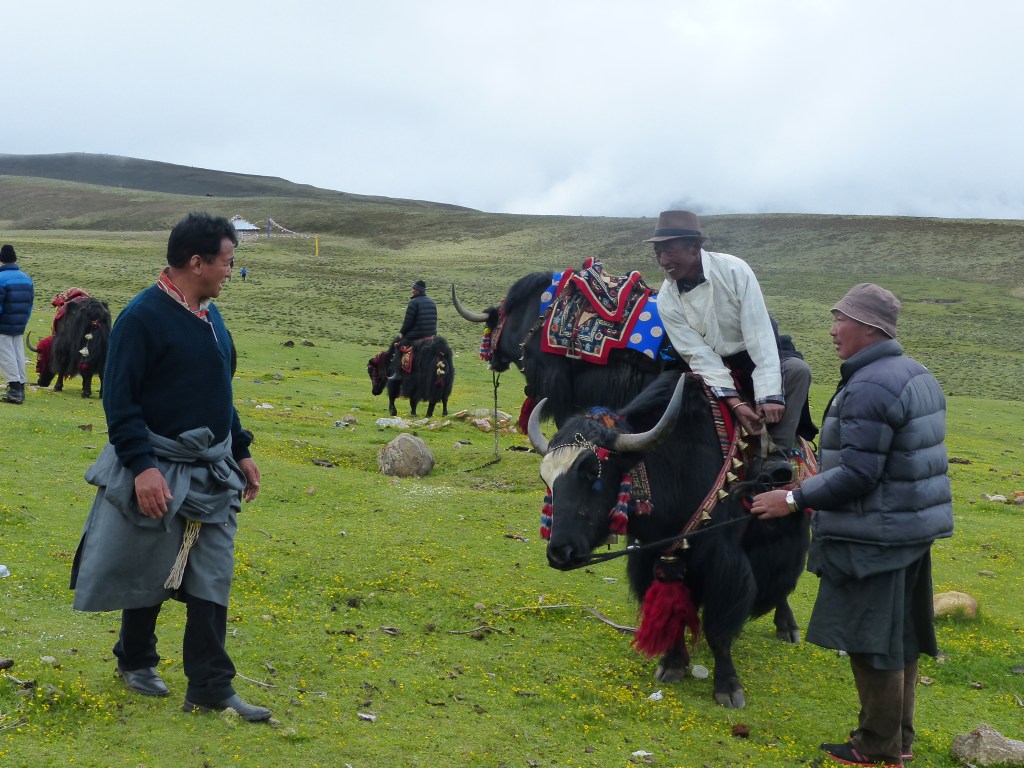
The panel had four presentations where the scholars addressed the central theme – Mobility – through different lenses in their study sites.
There are multiple meanings and lenses through which one can explore pastoral mobilities and their associated stressors. Exploring these can add nuances to the concept of ‘mobility’ in the pastoral landscape. These nuances are critical for informing rangeland policies and dialogues around pastoral land rights, and pastoralists’ participation in policy making.
Climate Change, Mobility and Tibetan refugees
Three out of four presentations were based in the Himalayan region of India. The first presentation by Tenzin Yangkey explored the linkages between climate change and Tibetan refugee pastoral mobilities in the Changthang region of Leh in the Indian Western Himalaya. In particular, her work explores how the political status of Tibetan refugees influences mobilities and other livelihood strategies in response to climatic variabilities.
As refugees, Tibetan pastoralists in Changthang have less representation in decision-making, and lower negotiating power for mobility and access to provision and resources than the resident Ladakhi pastoralists.
Mobility is critical for adapting to climatic variabilities and the extreme climatic events which the region has recently experienced. But it is restricted due to the local socio-political context, and the political status of Tibetan refugees.
Local Geopolitics and Pastoral Mobility in Jammu & Kashmir
Similarly to Tenzin’s work, Afreen Faridi highlighted limitations on mobility for political reasons in Jammu & Kashmir. Technologies like GIS (Geographic Information System, which creates maps linked to databases) have created more ‘borders’ for pastoralists, while being aimed at national security and the protection of international borders. Afreen describes such efforts as ‘technologies of dispossession and sedentarisation’.
These efforts include the abrogation of Article 370 from the Indian constitution, which provided the Indian state of Jammu & Kashmir a special status, and the exclusion of Gujri (the local language of the Gujjar-Bakarwals) from the list of official languages. Further, the redrawing of borders through land re-organization has stimulated non-native immigration and has positioned traditional dwellers as encroachers, thereby immobilizing nomadism.
Mobility, pace and time
Natasha Maru’s presentation focused on the concept of ‘pace’ and brought attention to the temporal dimensions of mobility in pastoral livelihoods. Pastoralism involves multiple types of mobilities, including seasonal and daily mobilities, reconstructed in response to broader changes.
Pastoralists are both ‘paced by’ a variety of social and ecological changes in the system, and they also manage their ‘pace’, mediated by political, regional and cultural events, as well as by ecological variability and uncertainty.
Mobility and zoonotic disease
The last presentation in the panel by Munib Khaniyari and Rashmi Singh Rana explore a different dimension of pastoral mobilities and their links to zoonotic diseases.
The more mobile livestock of the Kinnaura tribe (a nomic tribe of Indian Himalaya region) was found to have a higher load of endo-parasitic burden than the sedentary livestock in the region. Participatory disease management could help herders ensure that disease transmission doesn’t occur between livestock and wild herbivores like ibex, blue sheep and others.
Find out more
Read related posts with the tags: Latin America, South Asia and Mobility .
 Pastoralism, Uncertainty and Resilience - PASTRES
It may seem wrong to quote just one passage from the many fine links offered, but this one insight deserves repeating I believe:
“Learnings from mobile peoples offer a plural understanding of progress and modernities that incorporate different visions of the future. Such an understanding serves to upset the reifying, unitary and linear vision of modernity. Hybrid, porous, layered multiplicities of modernity emerge through the cracks between the dichotomy of ‘new’ and ‘old’ and ‘fast’ and ‘slow’ mobilities, and ‘nomads’ and ‘neo-nomads.’. Modernity at these intersections emerge as adaptive, heterogeneous, experimental, accidental, ambiguous and uncertain.” (from the Maru/Narong link)
LikeLike