by Masresha Taye
This blog is based on the seventh chapter of the newly published book Pastoralism, Uncertainty and Development edited by Ian Scoones.

Insurance is often proposed as a way of offsetting risks and responding to disasters. Index-based livestock insurance (IBLI) has been offered to pastoralists in Borana zone in southern Ethiopia over the past few years. This aims to pay-out before the disaster strikes based on a predictive assessment of the season derived from satellite-based estimates of livestock forage availability. It sounds like a good solution, but does it work and for whom? Livestock insurance has a number of assumptions embedded in the design. These include that the coming season can be reliably predicted; that the effects play out uniformly over an area; that the drought strikes as a single event and that livestock are held individually and responses are individualised.
As the chapter shows, in the Borana rangelands, these assumptions do not hold. Droughts are unpredictable and their effects are often quite idiosyncratic, combining with other stresses and shocks. Meanwhile, sharing and redistributive arrangements are important for livestock owners in the face of droughts, as not all risks and uncertainties are faced alone. This chapter looks at how IBLI is combined with other responses to drought in two sites in Borana. Based on in-depth interviews and surveys, the chapter shows how insurance has proven useful to some as part of a portfolio of responses.
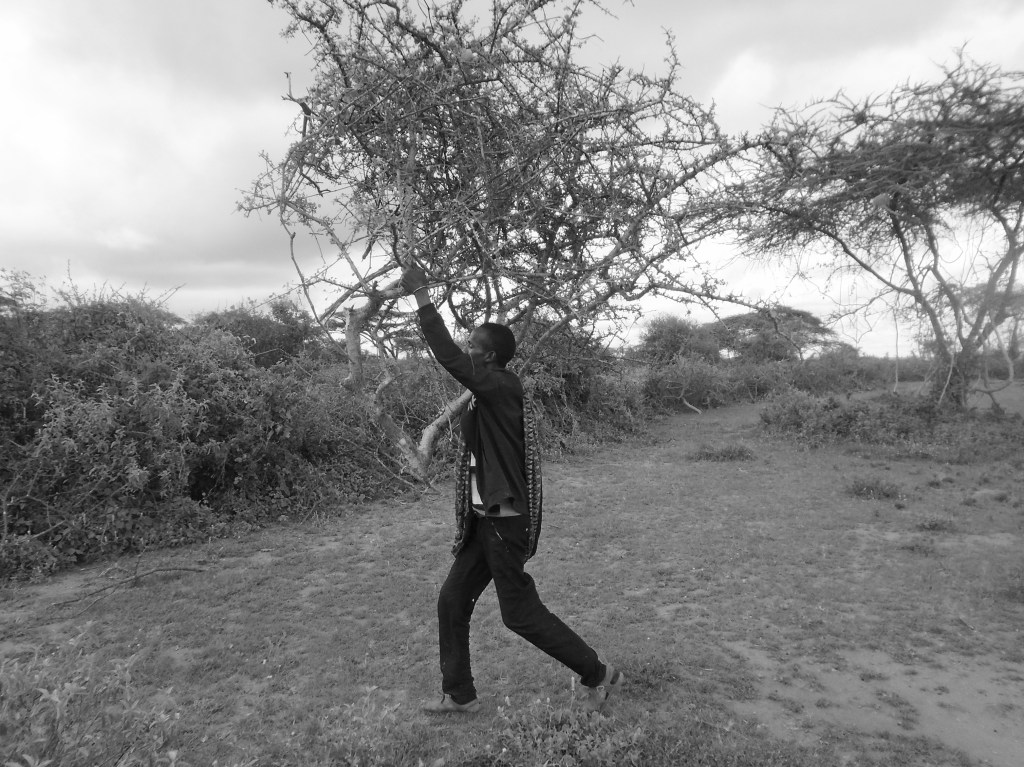
photovoice exercise of PASTRES photovoice project)
This is especially for richer cattle owners who have large herds and are mostly men. Others make less use of insurance and use other local responses, including diversification, livestock sharing, mobility and other resource management practices. These are more appropriate to responding to drought as an uncertain, unfolding flow of experiences, rather than a predictable, singular event portrayed as a calculable risk in an insurance product. Insurance is therefore not a ‘silver-bullet’ solution to dryland challenges but must be seen as part of a suite of responses, including those long used by pastoralists themselves.
Learn more about Masresha Taye’s work. Read his PhD thesis and other posts here: https://pastres.org/tag/masresha-taye/
Read the recent papers on the livestock insurance in the region by PASTRES:
Uncertainty in the drylands: Rethinking in/formal insurance from pastoral East Africa
The Politics of Land, Resources & Investment in Eastern Africa’s Pastoral Drylands
 Pastoralism, Uncertainty and Resilience - PASTRES