
by Natasha Maru
This blog provides a brief overview of the third chapter of our newly published book Pastoralism, Uncertainty and Development.
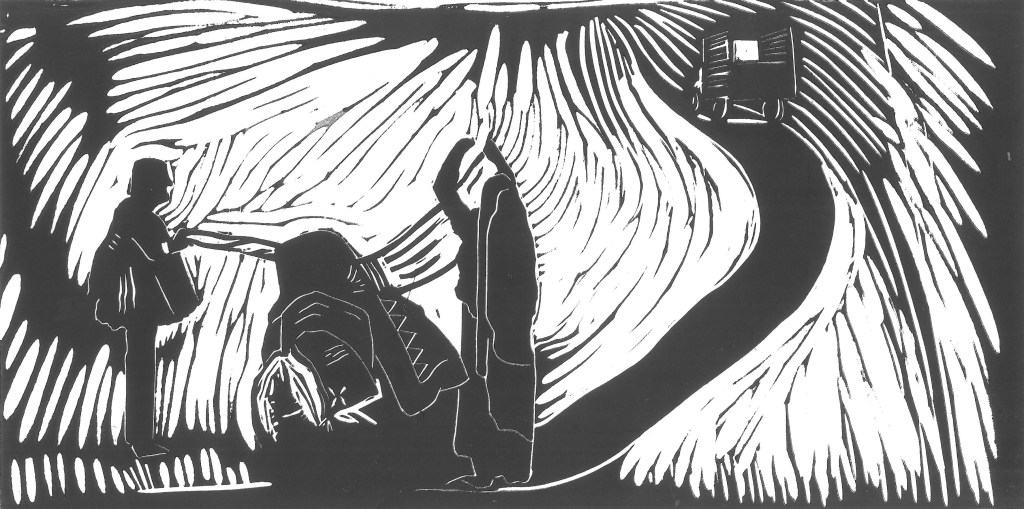
The third chapter of the book focuses on the experiences of the Rabari of western India. Pastoralists of the region engage with uncertain futures by making real-time adjustments to their mobility in the here-and-now. Applying a temporal lens, the chapter emphasises the nomadic ‘present’ as the arena in and through which pastoralists manage change and uncertainty through different forms of mobility.
The chapter provides various examples that reveal the ‘built in elasticity’ to perceive and respond immediately and on-the-move to change. Pastoralists are deeply attuned to the shifts in context, and show diverse, multiple and contingent mobilities, which are illustrated in the chapter through case study examples. Collective mobility in the face of uncertainties underpins the success of pastoralists and so mobility as a central response to uncertainty is embedded in cultural and social relations and institutions. Rabari pastoralists may alter the direction, speed, pattern and rhythm of their movement as well as move across diverse interconnected spaces. There are however important limits of the flexible, adaptable present.
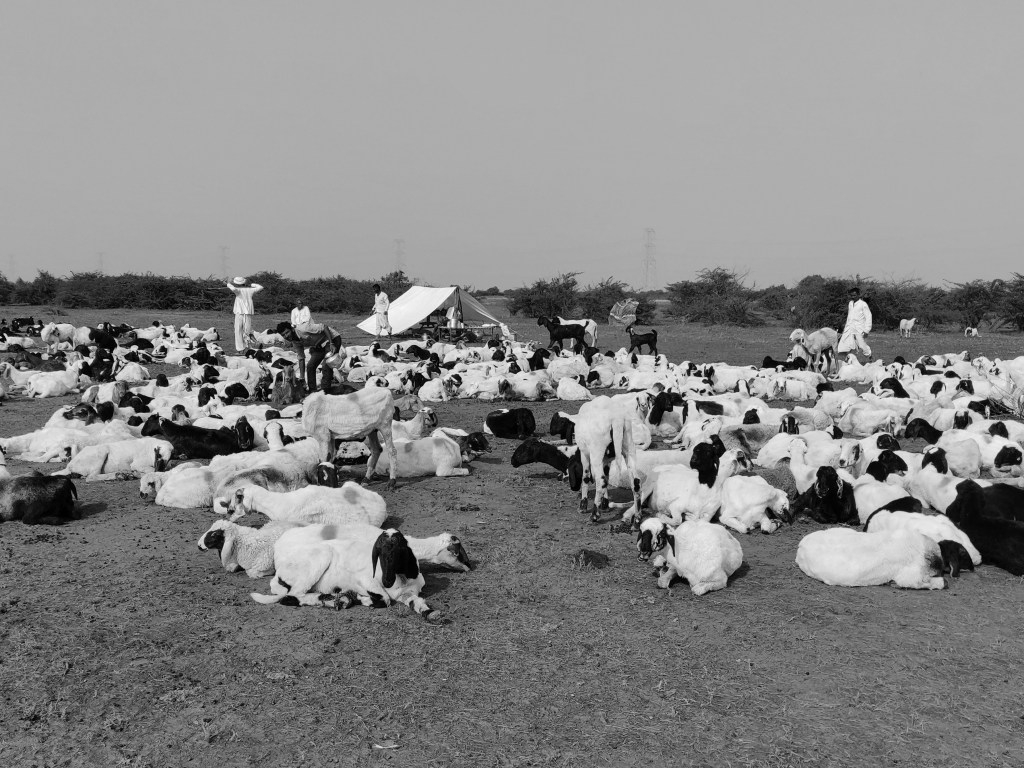
As Rabari pastoralists experience the capitalist restructuring of their context in Gujarat, this constrains their ability to adapt and respond. Through detailed field examples, the chapter explores the experiences of the pastoralists as they confront both the opportunities and threats offered by diverse uncertainties.
Learn more about Natasha Maru’s work here: https://pastres.org/2022/09/30/video-natasha-maru-on-pastoralism-and-temporality-in-kutch/
 Pastoralism, Uncertainty and Resilience - PASTRES