
by Emery Roe
If you understand stabilization and expansion of herder outputs and outcomes — in particular household livelihoods — are central to pastoralism, then there are varieties of pastoralism. This is largely because efforts to achieve stable and expanding livelihoods vary with the critical infrastructures upon which the livestock-related activities depend.
Some pastoralisms depend on roads and vehicles for livestock transport and water provision. Others rely on helicopters from time to time. Veterinary health infrastructures are instrumental in various ways and it’s now a commonplace to say pastoralists rely on and configure around market infrastructures differently. Migration infrastructure for those leaving their households and remittance infrastructures for the migrants to send income back to the households are various as well.
Critical infrastructures, in other words, do not just affect pastoralist behaviour; pastoralist systems are majorly defined through different infrastructure affordances.

Pastoralisms as a global infrastructure
There is a more controversial case to be made: The variety of pastoralisms themselves are a global infrastructure.
While vastly different in sociotechnical terms, the critical infrastructures with which I am familiar — water, energy, telecoms, transportation, hazardous liquids supplies — share the same logic: the system’s real time operators seek to increase process variance (in terms of diverse options, resources, strategies) in the face of high input variance (including variability in factors of production and climate) to achieve low and stable output variance (electricity, water and telecoms provided safely and continuously, even during — especially during — turbulent times).
This is the logic of requisite variety. Complex environments require complex means of adaptation. Having a diversity of resource and strategic options, including being willing and able to assemble, improvise or invent them just in time, is a way to match and manage problem complexity so as to achieve by and large stable results.
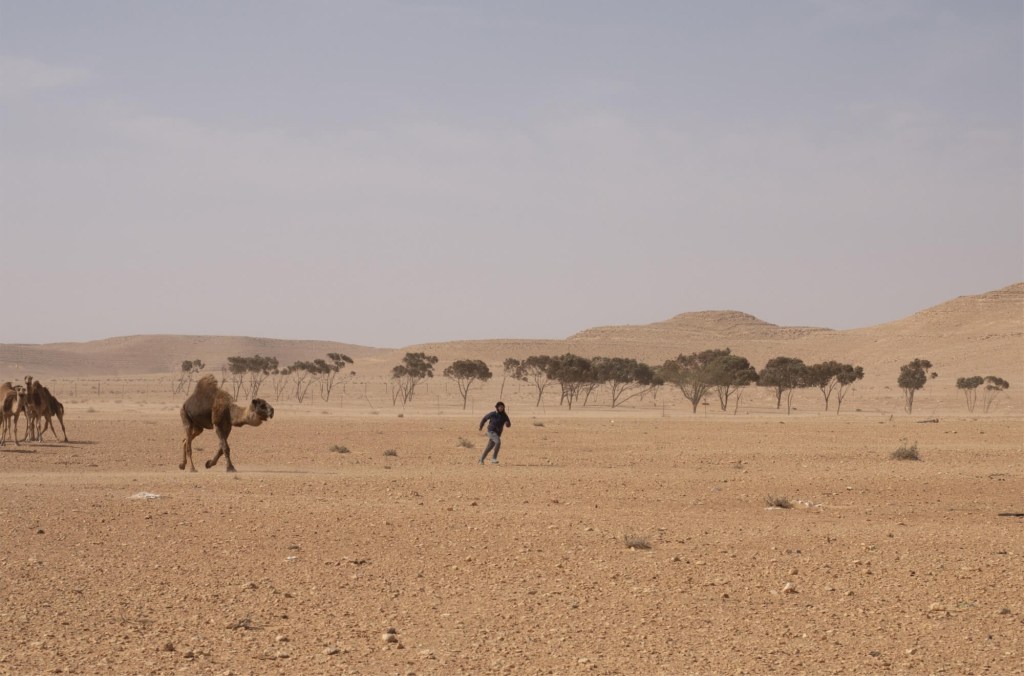

I submit pastoralist systems are, in respect to this logic, infrastructural; and as pastoralists and their systems are found worldwide, so too pastoralisms constitute a global infrastructure.
To be sure, not all pastoralist systems share this logic; nor are all pastoralists real-time reliability professionals; nor do all pastoralist systems reduce to this logic, only. Nor for that matter is it unusual that infrastructure systems are not officially recognized but nevertheless exist (as today for many governments with respect to cyberspace).
To be specific, the argument here is that pastoralist systems tender the world a key critical service (and have been doing so for a very long time): these systems, like other globalized/globalizing infrastructures, seek to increase process variance in the face of high input variance so as to achieve low and stable output variance. More, they do so by managing non-measurable uncertainties well beyond the capabilities of formal risk methodologies and in the face of increasing and diversified input variabilities. This key service is best understood as foundational to the world economy in times of great uncertainty and turbulence.
So what?
Return to the infrastructures instrumental in configuring varieties of pastoralism: the migration infrastructure, the veterinary health infrastructure, the road transport infrastructure, the water points infrastructure, the livestock market and communications infrastructures, the urban arrival (employment) infrastructures for out-migrants from herder households, and the specific infrastructures for — well, the list goes on, doesn’t it?
That said, from the perspective of pastoralism-as-global-infrastructure, the preceding separate infrastructures are part and parcel of the process variance (the requisite variety) of those varieties of pastoralist systems. Obviously, because pastoralisms rely on these other infrastructures differently, the environmental footprints left behind differ as well. If we were to compare these footprints, the well-documented physical damage done to the environment by roads, dams, and coal-fired plants extend far beyond their usage by pastoralist households.
Six other markers of pastoralisms as a global infrastructure
(1) When was the last time you read about “repairing” this or that pastoralist system or elements? Yet in thinking infrastructurally about pastoralism, remittances back to the herder household not only provide the means to add or alter management options at the site, they also help repair dryland systems that have lost labour and expertise.
(2) Large critical infrastructures cannot run 24/7/365 at 100% capacity and be reliable, and pastoralist systems are no different. This means comparing pastoralist livestock systems to a benchmark of “optimized” grassland ranching or intensive dairy production is ludicrous. The latter are more likely headed to failure anyway, i.e. they treat as inefficient and non-optimal the fallback options and resources — mistakenly called “excess capacity” — found in reliable pastoralist systems.
(3) So too herder restocking schemes are routinely criticized for returning livestock to low-resource rangelands. Yet government commodity buffer stocks (e.g. the infrastructure for holding grain, wool or oil in order to stabilize the prices of those commodities) are routinely recommended by other experts, decade after decade, be the countries low-resource or not.
(4) Speaking of prices and trade, when was the last time you heard pastoralist livestock exports from the world’s arid and semi-arid regions praised for this: reducing the global budget for virtual water trading from what it could have been. And yet, that is what pastoralist systems as a global infrastructure do.
(5) It is not just that pastoralist households have off-site activities with household members contributing from elsewhere to on-site pastoralist activities. In some cases, we should be asking ourselves if it’s more appropriate to say the major part of a pastoralism is now done off-site. (As in: what was once trading on the floor of a stock exchange is now done elsewhere via different digital platforms, the Hong Kong Stock Exchange being such a case.)
(6) There is an enduring paradox that also becomes very visible in this infrastructure perspective. Start with the international literature on the assetization of core national infrastructures, i.e., how schools, health facilities, police and other critical services are being privatized for the purposes of securing longer-term rents and profits. Critics understandably see these global trends in negative terms.
Why then are persistent failures and difficulties in establishing (read: assetizing) immovable pastoralist schools, permanent health facilities, huge site-specific pastoralist development projects, and land-use zones now free of armed conflict between pastoralists and farmers — why are all these treated in such overwhelmingly negative terms by like-minded critics?
Is it instead that pastoralisms (decidedly plural) resist assetization characteristic of other infrastructures? My own view is that resistance is precisely what the “mobilities” of pastoralists evidence in aggregate (now writ large to include out-migration of household members as well as more restricted herd movements within and across localities).
Upshot
I could list more markers, but their take-home message would remain the same: The priority isn’t to defend herders from physical depredations, as important as that is. Rather: we must fight for the expansion of actually-existing pastoralisms as a universal public infrastructure, just as many are doing with respect to universally available electricity and healthcare.
Speaking for myself, I hope that priority also finds itself centre-stage in the International Year of Rangelands and Pastoralists 2026.
More from this author
When Complex is as Simple as it Gets: Guide for Recasting Policy and Management in the Anthropocene – IDS working paper by Emery Roe (2023)
‘A New Policy Narrative for Pastoralism? Pastoralists as Reliability Professionals and Pastoralist Systems as Infrastructure’ – Working Paper by Emery Roe (2020)
Pastoralists as reliability professionals – PASTRES blogpost by Emery Roe
See also: “Key blog entries on pastoralists and pastoralisms” at Emery Roe’s blog, When Complex is as Simple as it Gets
 Pastoralism, Uncertainty and Resilience - PASTRES